


Native Mobile App Development: Everything to Know in 2026

 Updated on Oct 02, 2026
Look at your phone’s home screen right now. The apps you open every single day, the ones that never slow down and feel very smooth, are almost always native apps. A native app is a mobile software application built specifically for a single operating system, either iOS or Android, using the official programming languages and tools made for that platform. Because these apps are downloaded directly from the Apple App Store or Google Play Store, they have full access to the phone’s internal hardware and latest system features.
Many businesses choose cheap, basic frameworks instead, only to face bad performance and poor reviews later. In a fast market like Singapore, cutting corners on your core technology is a costly mistake.
At TechTIQ Solutions, we believe you need a clear plan before spending money. This guide explains exactly how native mobile app development works and why it remains the best choice for high quality.
Key Takeaways
- Native mobile app development builds separate applications for iOS and Android using platform-specific languages, Swift for Apple devices and Kotlin for Android, to deliver maximum performance and full hardware access.
- Expect to invest 1.5x to 2x more than cross-platform builds because the native approach requires two distinct codebases, two specialist teams, and separate ongoing maintenance for each operating system.
- Native apps deliver the strongest security available on mobile by integrating directly with on-device features like Face ID, fingerprint authentication, and hardware-level encryption, which is critical for PDPA compliance in Singapore.
- Choose native mobile app development when your product handles sensitive financial data, real-time GPS, AR/VR, or complex hardware interactions.
- The future of native app development is shaped by declarative UI frameworks (SwiftUI, Jetpack Compose), on-device AI processing, 5G-powered edge computing, and privacy-first architecture aligned with Singapore’s PDPA regulations.
What is Native App Development?
Native app development is building a mobile application specifically for one operating system. Developers use specific programming languages and tools made only for that platform. If you want an app for an iPhone, you build it using Apple’s tools. If you want an app for an Android device, you use Google’s tools.
iOS Native App Development
When companies build apps specifically for the Apple ecosystem, they focus entirely on native iOS app development. This approach means the software is tailored to run exclusively on Apple devices like the iPhone and iPad, allowing the software to match the exact behavior of the operating system.
- Primary Language: Swift is the modern programming language used here, widely regarded as the best language for iOS app development. It is fast, safe, and makes it easy for developers to write clean code.
- UI Framework: SwiftUI is the official toolkit used to build user interfaces. It helps engineers create smooth visuals with less effort.
- Main Tool: Xcode is the official software program where developers write, test, and prepare the app for the App Store.
Android Native App Development
For the Google ecosystem, development teams use a completely different setup built around native Android app development. This process focuses on creating applications that run smoothly across the large and diverse world of Android devices.
- Primary Language: Kotlin is the preferred language for modern Android applications. It helps prevent common code crashes and speeds up the building process.
- UI Framework: Jetpack Compose is the modern tool used to design responsive and interactive user interfaces on Android screens.
- Main Tool: Android Studio is the official program where developers write the code, fix errors, and optimize performance.
Examples of Native Mobile Apps
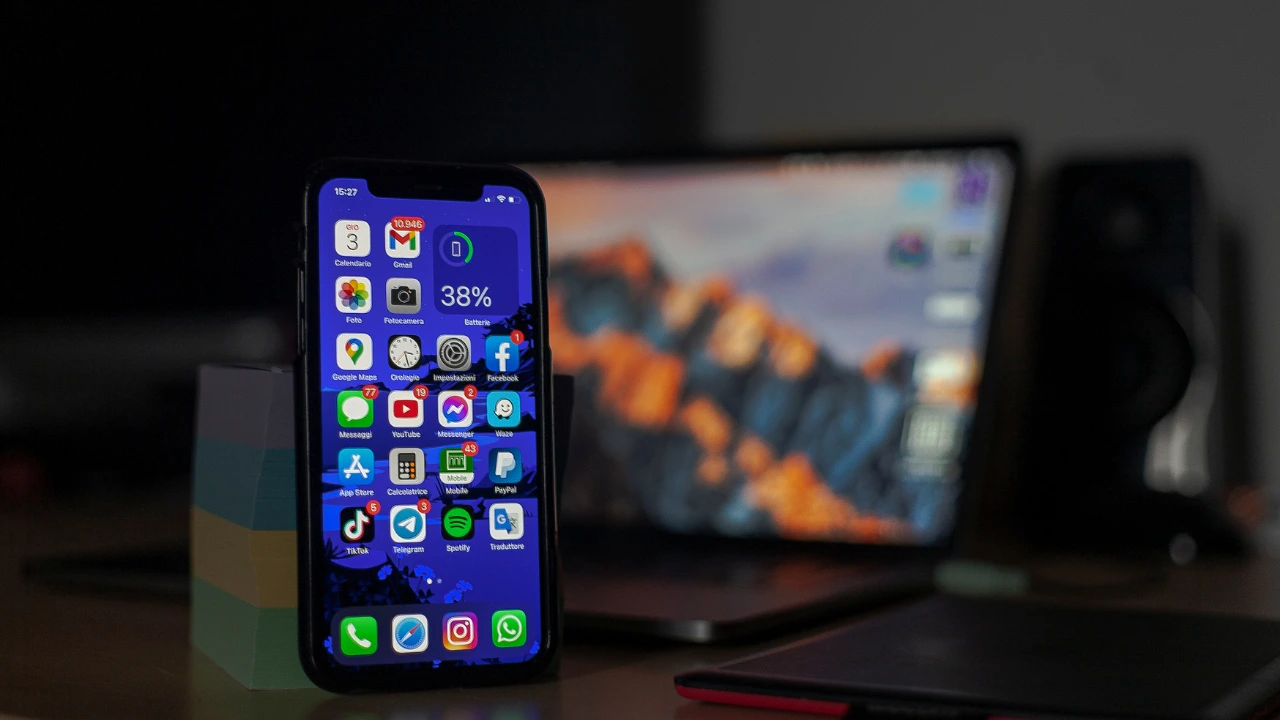
To see how this works in real life, we can look at the everyday digital market in Singapore. Many of the most popular and trusted applications use mobile native app development because they require heavy security, instant loading times, and deep integration with phone hardware.
With billions of users worldwide, WhatsApp requires an architecture that can handle real-time messaging without any delay. The platform uses mobile native app development tools to build separate applications for iOS and Android. This allows the app to process end-to-end data encryption locally on the device and handle heavy voice and video calls smoothly. It also ensures that push notifications and background messages arrive instantly, even when your screen is locked.
Google Maps
Google Maps is a highly resource-intensive application that requires constant communication with the phone’s internal parts. To give you accurate, turn-by-turn driving directions, the app needs direct and fast access to the phone’s built-in GPS, compass, and accelerometer sensors. Building this tool with native mobile app development ensures that the map rotates smoothly as you walk and downloads large local map files for offline use without crashing.
Spotify
Streaming music smoothly while doing other tasks on your phone requires smart resource management. Spotify relies heavily on native mobile code to handle its complex audio features. The app needs direct access to the device’s audio hardware, Bluetooth systems for wireless speakers, and local storage to save offline playlists. By using mobile native app development, Spotify can play music in the background without stuttering, even when you are using heavy apps at the same time.
Benefits of Native App Development
Singaporean consumers expect apps to load instantly. Whether they are ordering food on the move or tapping their phones to pay at a hawker center, speed matters. Choosing a native approach offers several clear business advantages.
Optimized Performance
When you use native mobile app development tools, your application runs on code that talks directly to the phone’s chip. This means the app does not waste battery power or time translating code. For businesses in Singapore that handle live data tracking or fast checkout steps, this direct connection ensures zero lag and smooth scrolling, keeping your customers happy.
Consistent User Experience
Native apps follow Apple’s Human Interface Guidelines and Google’s Material Design, so swipe gestures, button placements, and navigation feel familiar to users from the first tap. Strong mobile app UI/UX design tailored to each platform reduces user drop-off rates and increases retention across both iOS app development and Android app development products.
Enhanced Security
Native applications integrate directly with on-device security features like Face ID, fingerprint authentication, and hardware-level encryption, which is essential for PDPA compliance in Singapore. This direct integration protects sensitive personal data, payment credentials, and financial transactions far better than web-wrapped alternatives.
Offline Functionality
Native apps store essential data locally on the device, so users can keep working even when reception drops in basement carparks or underground MRT stations. Customers can still view product catalogs, access saved vouchers, or draft information without hitting an error screen.
App Store Distribution
Publishing through the Apple App Store and Google Play Store gives your business instant global reach and built-in consumer trust through strict platform security audits. Both stores also handle app updates, regional payment processing, and ASO visibility, reducing your operational overhead.
Disadvantages of Native App Development
While the performance is excellent, building native software requires more resources. Singaporean business leaders must weigh these challenges against the long-term quality benefits before kicking off a project.
Higher Development Costs
Native projects cannot share code between platforms, so reaching both iOS and Android users requires building two separate applications from scratch. This typically doubles your initial engineering budget compared to a single cross-platform build.
Longer Development Time
Writing, testing, and debugging two distinct codebases extends your project timeline significantly. If your business needs to validate a market trend within weeks, native mobile app development may slow your launch.
Platform-Specific Expertise
Native projects require native app development experts with deep specialist knowledge in Swift and Kotlin, not generic web development skills, and this talent is scarce in Singapore’s competitive tech market. Managing two separate teams also demands tight coordination to keep iOS and Android feature parity on track.
Separate Maintenance
Two codebases mean two ongoing maintenance streams. Every time Apple releases a new iOS version or Google updates Android, your team must patch, test, and deploy updates twice, doubling long-term operational costs.
App Store Dependency
Native apps operate inside Apple and Google’s ecosystems, which enforce strict review guidelines that can delay critical updates. Both stores also charge 15% to 30% transaction fees on in-app purchases and subscriptions, directly cutting into your digital profit margins. (Source: Apple, Google)
Native App Development vs. Hybrid and Cross-Platform: A Comparison
Singaporean businesses typically choose between three main types of mobile apps, each handling the underlying codebase differently:
Native app development builds two separate applications, one for iOS using Swift and one for Android using Kotlin, both running directly on the device’s operating system.
Cross-platform app development uses a single shared codebase, written in frameworks like Flutter or React Native, that compiles into apps for both iOS and Android.
Hybrid app development wraps a web application built with HTML, CSS, and JavaScript inside a native shell, running through an internal browser layer on the device.
The right choice depends on your budget, timeline, performance needs, and hardware requirements. Here is how the three approaches compare key technical and business metrics.
| Feature | Native Apps | Cross-Platform Apps | Hybrid Apps |
| Performance | Maximum Speed (Runs directly on the phone’s chip) | Near-Native (Very good for most business apps) | Moderate to Slow (Can lag with heavy data or animations) |
| Codebase | Two separate codebases (One for iOS, one for Android) | Single codebase (Shared across both systems) | Single codebase (Uses standard web tech like HTML/CSS) |
| Development Cost | Higher (Requires hiring two separate specialist teams) | Medium (One team builds for both platforms) | Lowest (Easiest and cheapest to build quickly) |
| Time-to-Market | Longer (Building and testing two apps takes more time) | Faster (Launch on both stores at the same time) | Fastest (Converts existing web layouts into an app) |
| Hardware Access | Full & Instant (Direct access to GPS, camera, and biometrics) | Good (Relies on plugins to talk to the hardware) | Limited (Struggles with deep, complex device features) |
| Security Level | Highest (Utilizes the phone’s built-in hardware security) | High (Secure, but relies on third-party frameworks) | Basic (More vulnerable to common web-based risks) |
If your app handles sensitive financial data, requires real-time mapping, or needs to feel incredibly smooth, investing in native mobile app development is the safest choice.
However, if you are a startup looking to launch a basic MVP (Minimum Viable Product) to test the local market on a tight budget, cross-platform tools can save you time and money.
Choosing the Right App Development Approach for Singapore Businesses
Selecting your mobile development path is a long-term decision that shapes your product’s performance, cost, and scalability for years. Singaporean businesses should evaluate four core factors before committing to native mobile app development or an alternative.
1. Assess Your Budget and Resource Constraints
Choose native if you have the runway to hire separate iOS and Android specialists in Singapore’s competitive tech market. Choose cross-platform if you are an early-stage startup that needs to launch on both app stores without doubling engineering costs.
2. Define Your Launch Time-to-Market
Cross-platform builds launch faster, making them ideal for validating new app ideas or running short promotional campaigns in retail, logistics, or food delivery. Choose native when long-term quality outweighs speed, and you can commit to a multi-month development cycle.
3. Evaluate Required Hardware and Security Features
Choose native if your app handles PayNow transactions, requires PDPA compliance, or relies on real-time GPS, biometric authentication, or complex device hardware. Cross-platform tools work well for standard eCommerce storefronts and informational dashboards.
4. Plan for Scale and Local Regulations
Native app development is more sustainable long-term because it does not depend on third-party frameworks that may lag behind iOS or Android updates. If you plan to scale across Singapore and Southeast Asia, native infrastructure prevents costly rewrites later.
How Much Does Native App Development Cost?
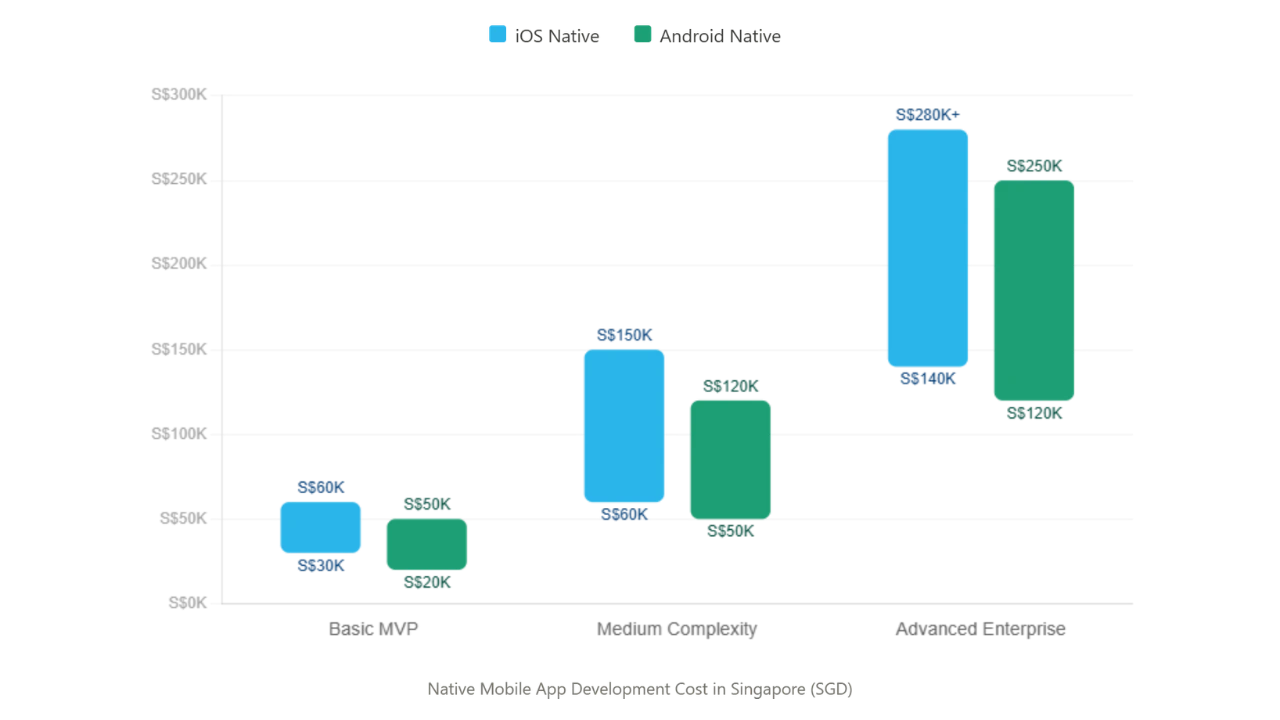
Estimating the financial investment for a custom mobile application requires looking closely at your desired features, user journeys, and platform architecture. Because a pure native project requires building two separate applications from scratch, the initial cost is naturally higher than generic web-wrapped alternatives.
To give you an immediate benchmark for your project planning, here is the baseline cost structure for native mobile applications based on current market data:
| App Complexity | iOS Native Cost (SGD) | Android Native Cost (SGD) | Typical Timeline | Core Features Included |
| Basic MVP | S$30,000 – S$60,000 | S$20,000 – S$50,000 | 2 – 4 Months | Standard user login, basic profiles, minimal data storage, and simple content display dashboards. |
| Medium Complexity | S$60,000 – S$150,000 | S$50,000 – S$120,000 | 4 – 9 Months | Custom UI/UX designs, payment gateway integrations, live push notifications, and mid-level API connections. |
| Advanced Enterprise | S$140,000 – S$280,000+ | S$120,000 – S$250,000 | 9 – 18+ Months | Real-time GPS tracking, multi-role user dashboards, complex data encryption, and advanced modules like AI or IoT. |
In the local market, the total investment is heavily driven by the complexity of your features and the technical scale of your backend infrastructure.
Besides, the launch budget is only part of the puzzle. Over the long run, successful software requires continuous optimization. You should expect to allocate around 15% to 25% of your original build cost annually to cover routine maintenance, app store compliance updates, server hosting fees, and security patches.
For a comprehensive breakdown of budgeting, hidden fees, and regional pricing levers, you can read our deep dive into app development costs in Singapore.
The Future of Native App Development
The next generation of Singaporean iOS and Android apps will be shaped by deeper hardware integration, on-device AI, and strict privacy boundaries. For local businesses, investing in native development is the key to future-proofing digital products in a highly competitive market.
On-Device AI and Machine Learning
Modern native apps run optimized models directly on a smartphone’s hardware chips rather than relying on cloud servers. Integrating professional AI development and machine learning into your native app enables instant offline processing for predictive analytics and personalization, resulting in faster response times and significantly lower hosting costs.
5G and Edge Computing
Leveraging Singapore’s mature 5G network, native architectures process data closer to the user to eliminate lag. This powers seamless, real-time mobile experiences for data-heavy operations like live logistics tracking and interactive AR shopping.
Faster Time-to-Market with Modern Frameworks
By utilizing modern, reactive UI frameworks, engineers can now build complex native interfaces using reusable code blocks. This eliminates redundant development hours, drastically accelerates your product launch timeline, and allows your business to roll out smooth feature updates at a fraction of the traditional cost.
Privacy-First Architecture
To ensure strict compliance with local PDPA regulations, future native development focuses heavily on localized storage. Native frameworks lock down sensitive customer records and transactions inside the device’s built-in hardware security vaults, offering unmatched data trust.
Read more: Top 10 Growing Trends in Mobile App Development
Why Choose TechTIQ Solutions for Native Mobile App Development
Building a premium native app requires a deep understanding of local user habits and strict security rules. TechTIQ Solutions combines local business strategy with robust engineering through our mobile app development services in Singapore to ensure your software delivers real commercial value.
Our team of native app development experts specializes in secure integrations for Singaporean services like PayNow, Singpass, and SGQR while ensuring strict compliance with local PDPA regulations. By combining on-site project management with extensive technical resources, we build custom solutions optimized with smart AI features to drive user engagement and give your business a strong competitive edge.
Through our agile workflow, we break development into clear milestones with regular test builds to eliminate timeline surprises. This transparent process ensures your final iOS and Android applications perfectly match your long-term business goals.
Ready to bring your mobile product to life? Contact TechTIQ Solutions today to schedule a technical assessment for your upcoming project.
Conclusion
Investing in native mobile app development is a strategic move for Singapore businesses aiming to secure a long-term digital advantage. By capitalizing on deeper hardware access, advanced on-device intelligence, and robust localized security, native applications deliver the speed, reliability, and trust that modern consumers demand. Partnering with an experienced team ensures your software stays ahead of technical shifts while driving measurable commercial success in a highly competitive regional market.
FAQs
What is the difference between a native mobile app and a web app?
A native mobile app is built specifically for iOS or Android using Swift or Kotlin, runs directly on the device, and accesses hardware like GPS, camera, and biometrics. A web app runs in a browser using HTML, CSS, and JavaScript, needs an internet connection, and works across any device without installation. Read our full web app vs mobile app comparison for more details.
What are the main native mobile app development languages?
The two primary native mobile app development languages are Swift for iOS and Kotlin for Android. Swift, developed by Apple, powers iPhone and iPad apps through SwiftUI and Xcode, while Kotlin, endorsed by Google, builds Android apps through Jetpack Compose and Android Studio.
Older codebases may still use Objective-C for iOS or Java for Android, but most new native projects in Singapore standardize on Swift and Kotlin.
What does a top native mobile app development service include?
A top native mobile app development service delivers end-to-end product development, from UI/UX design and architecture planning to native coding in Swift and Kotlin, QA testing, App Store and Google Play submission, and post-launch optimization.
Premium providers also include on-device AI integration, performance monitoring dashboards, and SLA-backed maintenance to keep your iOS and Android apps fast, secure, and compliant as platforms evolve.
Can you tell if an app is native just by using it?
Yes, native apps feel noticeably smoother than hybrid alternatives. Key signs include instant load times, fluid scrolling, native swipe gestures, and platform-consistent design following Apple’s Human Interface Guidelines or Google’s Material Design. Native apps also support offline mode, biometric login like Face ID, and rich push notifications.
How long does it typically take to build a native mobile app?
A basic native MVP takes 1 to 2 months, a medium-complexity app with payments and custom UI takes 4 to 9 months, and an advanced enterprise app with real-time tracking or AI takes 9 to 18 months. Timelines roughly double when building for both iOS and Android, since each platform needs a separate codebase and dedicated team.


Related articles

What Is Inventory Management Software and How Does It Work?
 Wei Kiong Tan
  08 Aug 2026
Web Design vs Web Development: Which One Do You Need?
13 Jul 2026 
PoC vs MVP vs Prototype: What’s the Difference?
03 Jul 2026 
Top 10 Programming Languages for Software Development in 2026
27 Jun 2026 
Top 10 .NET Development Companies in Singapore for 2026
23 Jun 2026 
10 Web Security Best Practices for Singapore Startups and SMEs in 2026
15 May 2026 
10 Minimum Viable Product Examples for Startups That Want to Win Early
10 May 2026 
What Is Web Design? A Complete Guide for Businesses
07 May 2026 
50 Best App Ideas for Startups and Entrepreneurs to Build in 2026
02 May 2026 


