


Your team uses ChatGPT, Copilot, or Gemini in a separate tab while your ERP and CRM know nothing about it. The output never reaches the record it belongs to, and nobody can audit which answer came from which data. This is the most common AI integration gap we find in Singapore companies.
-
OVERVIEW
-
SERVICES
-
WHY CHOOSE US ?
-
MODEL
-
TECHNOLOGIES
-
OUR PROCESS
-
FAQS
What Is AI Integration?
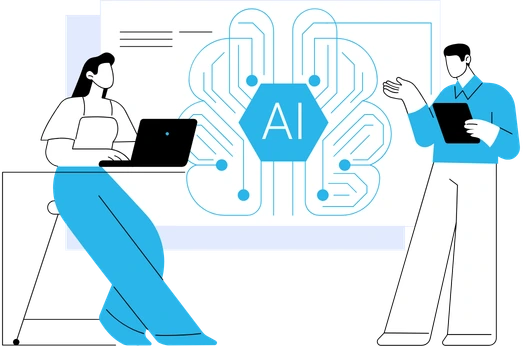
AI integration is the process of connecting AI models, APIs, and AI tools to your existing business systems so they work as one. The AI runs inside your current software instead of beside it.
At TechTIQ Solutions, we approach integration as an engineering problem. Latency, data contracts, access controls, and system dependencies shape the outcome as much as the model you pick. Our team builds the connection layer that makes AI integration with existing systems hold up in production.
Our Core Integration Capabilities
We deliver the full connection layer across six areas.
- Integration architecture: We design the APIs, middleware, and event-driven workflows that link AI models to your ERP, CRM, and internal databases.
- System readiness assessment: We audit data quality, infrastructure capacity, access controls, and integration constraints before any code is written.
- Deployment and scaling: We plan cloud adoption, deployment, and scaling so your AI models handle real production load.
- Governance and monitoring: We set up data lineage, model monitoring, drift detection, and controlled update cycles.
- Security and compliance: We build to PDPA requirements and align with the IMDA Model AI Governance Framework, keeping your data inside your environment.
- Team adoption: We run structured handover and training so staff actually use the integrated system.

350+
Skilled software engineers delivering excellence

8+
Years of dedicated industry experience

800+
Successfully software development projects

4
Offices in Asia
Signs Your Business Needs AI Integration Services
Five patterns show up again and again when we audit systems. Each one points to the same missing connection layer.

AI Tools Running Separately from Your Core Systems

Staff Copying Data Between Platforms by Hand
Someone exports a report, pastes it into an AI tool, then pastes the answer back into a document. That cycle can take 20 minutes per task. Run it 40 times a week and you have lost a full working day. Manual transfer also creates version errors that are hard to trace.

Existing Software That Cannot Reach Your AI Models
Older systems often have no usable API, or one that returns data in a format no model can read. Your model is ready, and your software cannot talk to it. Enterprise AI integration with existing systems solves this with middleware that translates between the two in both directions.

Failed Attempts to Connect AI Through Basic Plugins
Off-the-shelf plugins work for demos and break on real business rules. They cannot handle your approval flows, custom fields, or permission levels, and they fail under load. A failed plugin project usually signals that you need a custom AI integration built around your actual data model.

Concerns About Sending Company Data to External AI Providers
Legal asks where the data goes, nobody has a clear answer, and the project stops there. This is a valid concern under the PDPA, and it is solvable. A proper integration controls which fields leave your environment, masks the rest, and logs every call. This is one of the main AI integration challenges Singapore businesses face.
Already Have AI Tools? Let's Connect Them Properly
You do not need to start over. If you already pay for AI licenses, the fastest win is connecting them to the systems your team uses daily.
Talk to Our AI Experts
Our AI Integration Services in Singapore
Our AI integration services in Singapore cover the full path from feasibility check to live monitoring. Each service below can run alone or as part of one delivery.

AI Integration Consulting and Feasibility Assessment
Our AI integration consulting services start by checking what your systems can support today. Our consultants review your APIs, data quality, security rules, and internal workflows. You receive a written assessment covering what can be integrated now, what needs preparation work, and a cost estimate for each option. When no existing model fits your case, our AI development services team builds one.

LLM and Generative AI Integration
Our generative AI integration services connect large language models to your internal software through secure API calls, covering OpenAI, Anthropic Claude, Google Gemini, Azure OpenAI, and open-source models hosted in your own cloud. We build the prompt layer, the retrieval layer, and the guardrails. Retrieval-augmented generation lets the model answer using your documents rather than general internet content.

AI Agent and MCP Integration
AI agents need permission to act inside your systems, and that permission layer is what we build. We connect agents to your tools through the Model Context Protocol and custom function calling, with scoped access and full action logs. Every agent runs against your approval rules. See our AI agent development page for agent design and orchestration work.

AI Integration with ERP and CRM Systems
ERP and CRM systems hold your most valuable data, and they are where AI delivers the clearest return. We add AI features inside SAP, Oracle, Microsoft Dynamics, NetSuite, Salesforce, HubSpot, and Zoho. Examples include demand forecasting in the ERP, lead scoring in the CRM, and automatic summaries of long account histories. The user stays on one screen.

Document Processing and Data Extraction
Most business data sits in contracts, invoices, and scanned files that older systems cannot read. We integrate optical character recognition, entity extraction, and classification models that turn those documents into structured records. Extracted fields flow straight into your ERP or document management system, with confidence scores routing low-certainty items to a human reviewer.

AI Chatbot and Virtual Assistant Integration
We connect AI chatbots to the channels your customers already use, including your website, WhatsApp Business, Microsoft Teams, and your support ticket queue. The assistant reads from your knowledge base and your CRM, so answers reflect the customer's actual account. Escalation rules hand the conversation to a human agent with the full context attached.

API Development and Middleware for AI
Middleware is the layer that makes everything else possible. We build REST and GraphQL APIs, message queues, and event-driven services that carry data between your systems and your AI models. This layer handles retries, rate limits, error logging, and format conversion. It also keeps your model provider replaceable, which protects you from vendor lock-in.

Workflow and Automation Tool Integration
AI becomes useful when it triggers action. We connect models to n8n, Make, Zapier, Power Automate, and custom job schedulers. An invoice arrives, the model extracts the fields, the ERP creates the entry, and a human approves it. Each step writes back to your system of record, so the audit trail stays complete.

Data Pipeline and Vector Database Integration
Models are only as good as the data reaching them. We build ETL and ELT pipelines that clean, structure, and move data into a form the model can use. This includes vector database setup with Pinecone, Weaviate, or pgvector for semantic search. We also handle incremental sync so the AI always reads current records.

Multi-Cloud and Hybrid AI Deployment
Some workloads can run on a public model endpoint while others must stay inside your own infrastructure. We design deployments that split traffic by data sensitivity, running open-source models on your private cloud and routing lower-risk requests to hosted providers. This keeps regulated data within Singapore while you still use the strongest available models.

Security, Compliance, and Governance
Every integration ships with controls built in. We apply field-level masking, role-based access, encrypted transport, and full audit logging so you can show exactly which data left your environment and when. Our builds align with PDPA obligations and the IMDA Model AI Governance Framework, which is what most legal teams ask for before approval.

Monitoring and Model Optimization
An integration that works at launch can drift within months. We set up dashboards tracking token spend, response time, error rate, and output quality against a baseline. When accuracy drops or costs rise, we tune prompts, adjust retrieval settings, or switch model versions. You get a monthly report with the numbers and the changes made.
Ready to Connect AI to the Systems You Already Run?
Tell us which systems you run. Within one working day, we will tell you whether they can connect to AI and what the assessment involves.
Book a Consultation
Systems We Integrate AI With
A trusted AI integration company in Singapore needs to work with what you already have, including the platforms Singapore companies actually run and internal software built years ago. The sections below cover how we reach each system and what shapes the timeline.

ERP Platforms
We connect through certified interfaces where they exist, including SAP BTP, NetSuite SuiteTalk, and the Dynamics 365 Web API. Odoo and Infor need custom connectors. Integration depth depends on your licence tier, so we confirm that during the assessment before quoting.
CRM Platforms
Salesforce, HubSpot, and Zoho all expose stable APIs, which keeps these projects short. Pipedrive limits some record types on lower plans. We map every field your AI features need before build starts, so nothing breaks when your CRM updates.

Internal Web and Mobile Applications
We work directly in your codebase across .NET, Java, PHP, Node.js, React, and React Native. Access to the repository and a staging environment sets the pace here. Where documentation is thin, we run a short code review first and price the integration based on what we find.

Legacy Systems Without a Modern API
We reach these systems through direct database reads, scheduled file exports, or screen-level automation when nothing else exists. Each method carries different risks, and we document which one your case needs. Your original system receives no code changes.

Customer Support Platforms
Zendesk, Freshdesk, and Intercom support webhooks and app frameworks, so AI features can run inside the agent's view. Custom ticket systems need a middleware layer instead. Either way, we work against your existing ticket schema rather than asking you to restructure it.

E-Commerce Platforms
Shopify and WooCommerce allow app-level integration without touching the storefront theme. Magento and custom builds need server-side work. Catalogue size and traffic pattern decide whether we process in real time or in scheduled batches.

HR and Payroll Systems
Workday, BambooHR, and Talenox restrict API access by module and by plan, so we confirm your entitlements early. Personal data stays masked at the pipeline level, and payroll fields never leave your environment. PDPA obligations shape the design of every HR integration we build.

Databases and Data Warehouses
We connect SQL Server, PostgreSQL, MySQL, Oracle, MongoDB, Snowflake, and BigQuery through read-only service accounts. Query volume and row-level permissions shape the design, and we set both before any model touches production data.
Why Choose TechTIQ Solutions for AI Integration in Singapore?
TechTIQ Solutions is a leading AI integration company in Singapore with delivery experience across regulated and fast-moving industries.
 Singapore-Based Expertise
We build against PDPA requirements, MAS guidance for financial services, and IMDA governance frameworks. Our team has delivered custom software for Singapore businesses across finance, healthcare, and logistics, so we know which questions your compliance reviewers will ask before they ask them.
End-to-End Delivery
One team handles assessment, design, development, testing, deployment, and support. Working with a single artificial intelligence integration services firm means you do not manage handoffs between a consultant, a developer, and a support vendor. Accountability sits in one place across the full project.
Flexible Engagement Models
Some clients need a fixed scope. Others need engineers who join their team. We offer fixed-price delivery, staff augmentation, and dedicated teams. You can also start with one model and move to another as the work changes.
Agile and Transparent Process
We work in two-week sprints with a demo at the end of each one. You see progress in working software, not status decks. Scope changes are priced and agreed before work starts, so there are no surprises at invoicing.
Cost-Effective Without Cutting Corners
Our rates sit below comparable AI integration companies in Singapore and Southeast Asia. We reach that through efficient delivery, with no junior staffing and no skipped testing. Every integration goes through code review, security review, and QA before release.
Vendor-Neutral Model Selection
As a trusted AI integration consulting services provider, TechTIQ Solutions does not resell any AI platform, so we have no reason to push one. We benchmark candidate models against your actual data and recommend the best fit on accuracy, latency, and cost.
ISO-Certified Quality and Security Standards
Our delivery process follows ISO 9001 for quality management and ISO 27001 for information security. That covers access control, code handling, incident response, and data retention. For clients in banking, insurance, and healthcare, these controls are usually a procurement requirement.
Consistent On-Time Delivery
We commit to dates after the assessment, not before it. That is why our on-time delivery record stays high. When a risk appears in mid-sprint, you hear about it in that sprint, not at the deadline.


Trusted By








Hear It Straight From Our Clients
TechTIQ Solutions Pte Ltd has delivered a functional app that has significantly improved the user experience and performance of the platform. The team has been responsive and proactive, and internal stakeholders are particularly impressed with the service provider's code quality.
Andrew Simpson
CEO, HeartSciences

The dedication of the TechTIQ Solutions Pte Ltd's team was truly remarkable.
Manuel Trigueiros Rafael Ferreira de Lemos
Co-Founder & CEO, Enline Energy Solutions
TechTIQ Solutions' team was full of software development and communication experts, which I found rare in other companies.
Richard Hopper
CFO, Transportation Services, Inc. (TSI)
Our AI Integration Case Studies
Offshore Dedicated Team
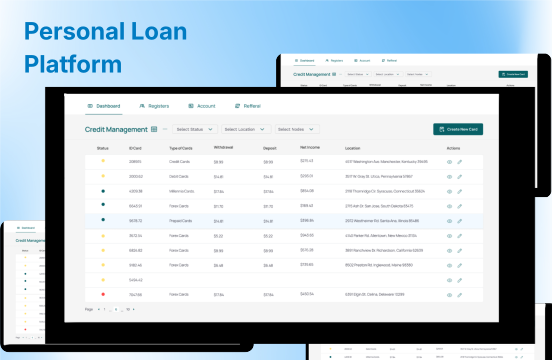
Personal Loan Platform
TechTIQ Solutions developed a comprehensive Personal Loan Platform, enabling institutions, health insurance funds, and individuals.
Detail

Offshore Dedicated Team
KNOWLEDGEONE CORP
TechTIQ Solutions collaborated with Knowledgeone Corporation to enhance their software development and services. Learn more!
Detail
Offshore Dedicated Team
Jumar Staffing
TechTIQ Solutions collaborated with Jumar, a UK-based digital services provider, to establish an Offshore Development Center (ODC).
Detail
Web Application Development
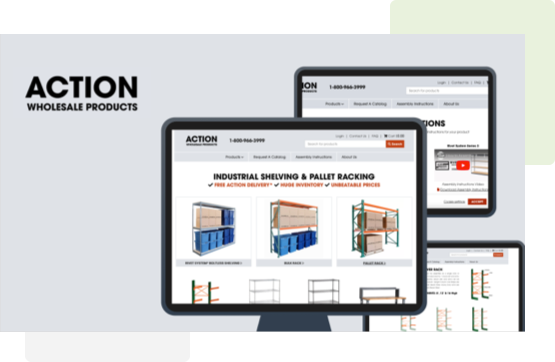
ActionWP Platform
TechTIQ Solutions modernized ActionWP with improved UI, speed, and features through expert web development in Singapore.
Detail
Offshore Dedicated Team

HoloLens
This revolutionary program combined the capabilities of computer vision and mixed reality to present users with a unified and immersive augmented reality experience. Scan Environment, Measure Straight Line, Measure Area, Measure Room, Detect Text, Read Text, and Detect Objects were just some of the ways the HoloLens software brought the real world to life and […]
Detail
Web Application Development
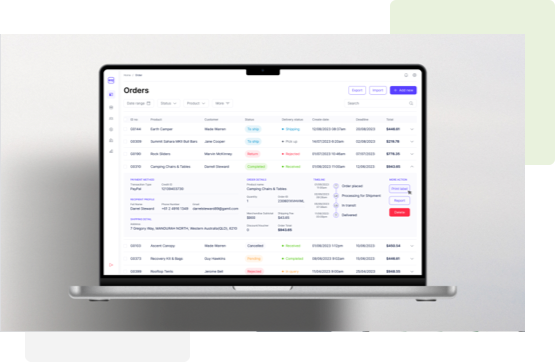
ARB AUSTRALIA
The similarity between the mobile app and its web counterpart can only be guaranteed by using a single source code. Thus, it doesn’t matter if a user is using the app from a mobile device or a desktop computer, they’ll enjoy the same, smooth experience. The necessity for two teams to work on distinct codebases […]
Detail
Mobile App Development

LUXASIA
Luxasia is a renowned omni-channel that specializes in facilitating the buying and selling of diverse luxury products. It has established itself as an emblematic entity in Singapore, with a mission to bridge the gap between brands and end-users.
Detail
Web Application Development
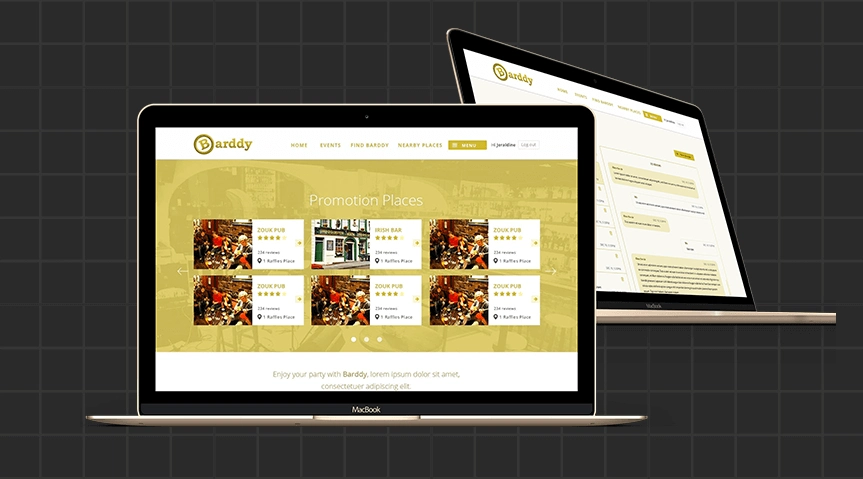
Barddy
Explore pubs, nearby clubs . Events with barddy. News, reviews from newest places search nearby, advanced options. Find the pub that fit to you.
Detail
Our AI Tech Stack

















































The AI Technologies We Work With
Our engineers build with the frameworks and models below. TechTIQ Solutions selects each one based on your data, your budget, and where the workload needs to run.

Machine Learning
We build with TensorFlow, PyTorch, scikit-learn, and XGBoost. These models handle classification, clustering, anomaly detection, and scoring tasks that run on structured business data.

Deep Learning
Neural networks handle patterns that are too complex for standard machine learning. We train and fine-tune models on GPU infrastructure, using transfer learning to cut cost when your dataset is small.

Natural Language Processing
We work with spaCy, Hugging Face Transformers, and Azure AI Language. These models classify text, extract named entities, detect intent, and score sentiment across documents and messages.

Computer Vision
We use YOLO, OpenCV, Tesseract OCR, and Azure Document Intelligence for object detection, image classification, and text recognition in scanned files, photographs, and video streams.

Speech and Audio AI
We work with Whisper, Azure Speech, and Google Speech-to-Text. These models transcribe recordings, separate speakers, and translate audio across the languages common in Southeast Asia.

Predictive Analytics
We build forecasting models with Prophet, ARIMA, Databricks, and BigQuery ML. These estimate demand, detect seasonal patterns, and flag values that fall outside expected ranges.
Our Engagement Models in Singapore
Some clients need a fixed scope. Others need engineers who join their team. TechTIQ Solutions offers custom AI integration services in Singapore through fixed-price delivery, staff augmentation, and dedicated teams.

Fixed-Price Model
You approve a defined scope, timeline, and cost before development starts. This suits a single integration with clear boundaries, such as connecting one AI model to one CRM. Payment follows agreed milestones, and scope changes are quoted separately.

Staff Augmentation
We place integration engineers, data engineers, or AI specialists into your existing team. They follow your process and report to your manager. This model works when you have internal capacity but need specific AI integration experience. You pay a monthly rate per engineer.

Dedicated Development Team
You get a full team assigned to your roadmap, including a project manager and QA. The team handles multiple integrations over time and builds deep knowledge of your systems. This is the common choice for enterprise AI integration programs that expand across departments.
Not Sure Which Model Fits Your Project? Let's Talk
Discuss Your Project
Our Structured Approach to AI Integration in Singapore
As an AI integration agency in Singapore, TechTIQ Solutions runs every project through the same six steps, sized to the scope of the work. You approve the output of each step before the next one starts.

Step 1: System Audit and Feasibility Check
We map your systems, APIs, data sources, and security rules. The output is a written feasibility report covering what is possible now, what needs preparation, and the effort behind each option. This step usually takes one to two weeks.

Step 2: Integration Design and Model Selection
We design the connection layer and benchmark candidate models against your real data. You receive an architecture diagram, a data flow map showing exactly which fields move where, and a model recommendation with cost per month.

Step 3: Compliance Review and Sign-Off
Your legal, risk, and data protection reviewers assess the design before any code is written. We supply the documents they ask for, including field-level data flow records, retention terms, and the controls that keep regulated data inside your environment. Regulated clients often add MAS or sector-specific requirements at this stage.

Step 4: Sprint-Based Development
Development runs in two-week sprints with a working demo at the end of each. You see progress against the approved design and can request changes while the cost of changing is still low. Most integrations are completed in four to twelve weeks.

Step 5: Testing, Security Review, and Quality Assurance
We test function, performance, and output quality before anything reaches users. This includes load testing, failure handling, prompt injection checks, access control review, and a data flow audit. Every finding is fixed and retested before release.

Step 6: Pilot, Rollout, and Handover
We start with one department, measure results against the baseline agreed in Step 2, then expand. Handover includes admin training, runbooks, and a named engineer for the first support period.
Industries We Serve in Singapore
We deliver AI integration software Singapore companies can put into regulated production environments.

Banking and Financial Services
Fraud pattern detection, credit memo drafting, KYC document processing, and client query summarization. All integrations follow MAS guidance and keep customer data inside approved boundaries.

Healthcare
Clinical note summarization, appointment triage, and medical record search. Patient identifiers are masked before any external model call.

Fintech
Transaction risk scoring in real time, onboarding document verification, chargeback dispute handling, and merchant support automation. Integrations connect to payment gateways and ledger systems without holding card data.

Insurance
Claims document extraction, policy question answering, underwriting support, and fraud signal detection connected to core policy administration systems.

Education
Course content generation, student query handling, assignment feedback drafting, and searchable access to institutional documents. Student records stay masked before any external model call.

Logistics and Supply Chain
Shipment delay prediction, document extraction for bills of lading, route exception handling, and warehouse demand forecasting inside existing WMS platforms.

Retail
Store-level demand forecasting, shelf availability checks from camera feeds, loyalty offer personalization, and staff scheduling based on foot traffic patterns. Integrations connect to your POS and inventory systems.

E-Commerce
Product description generation at catalogue scale, semantic search across listings, recommendation ranking, and AI-assisted customer messaging connected to your storefront and order management system.

Manufacturing
Quality inspection with computer vision, maintenance prediction from sensor data, and production reporting in plain language for plant managers.

Real Estate
Listing content generation, tenant enquiry handling, lease document review, and property valuation support inside agency CRM systems.

Public Sector
Citizen enquiry handling, policy document search, and internal report drafting. Deployments can run fully inside government-approved cloud environments.

Food and Beverage
Menu content generation, review sentiment analysis across delivery platforms, ingredient demand forecasting, and order handling connected to your POS and kitchen display systems.
Our Related Articles
 Oct 01, 2026
FAQs
What is the difference between AI integration and AI development services?


AI development builds a new model or AI product from scratch. Artificial intelligence integration services in Singapore connect existing models to systems you already run. Development suits capabilities no vendor sells. Integration suits most business tasks and delivers results in weeks instead of months, at a much lower cost.
How long does an AI integration project take?
Most projects go live in 4 to 12 weeks. A single CRM or helpdesk integration often finishes in 4 to 6 weeks. Multi-system work with legacy platforms and strict compliance review takes 10 to 16 weeks. The feasibility check gives you a firm timeline before development starts.
How much do AI integration services cost in Singapore?
Fixed-price projects usually range from SGD 25,000 to SGD 90,000, depending on system complexity and security requirements. Dedicated teams start around SGD 25,000 per month. Model usage is billed separately by the provider and typically runs a few hundred to a few thousand dollars monthly.
Can AI be integrated without changing our existing systems?
Yes, in most cases. We connect through your existing APIs or add a middleware layer that sits outside your core software. Your database schema, business logic, and user interface stay as they are. Changes are only needed when a legacy system has no way to exchange data.
Is our company data safe when integrating third-party AI models?
Yes, when the integration is built correctly. We mask personal identifiers before any external call, encrypt data in transit, and log every request for audit. For sensitive workloads, we deploy open-source models inside your own cloud so no data leaves your environment.
Which AI model should we integrate with our systems?
It depends on your task, latency needs, and budget. We benchmark candidate models against your real data during the design step. Some clients get better results from a smaller open-source model than from a premium one. Like most pioneering AI integration firms in Singapore, we test before recommending, and we are vendor-neutral, so the recommendation follows the results.
Start Your AI Integration Journey Today
Tell us which systems you run and what you want AI to do, and we will come back with a clear scope, timeline, and cost.
