


The same error returns every few weeks. Someone restarts the service and the ticket closes. Nobody has time to find the root cause, so each restart adds a little more risk.
-
OVERVIEW
-
SERVICES
-
WHY CHOOSE US ?
-
MODEL
-
TECHNOLOGIES
-
OUR PROCESS
-
FAQS
What Are Software Maintenance and Support Services?
Software maintenance and support services are ongoing engineering services that keep a live software system working correctly after launch. They cover bug fixes, security patches, platform updates, performance tuning, and daily technical support for users.
The two terms describe different work. Software maintenance changes the code. It fixes defects, updates dependencies, and improves how the system performs. Software support helps people use the system. It answers tickets, investigates issues, and restores service when something breaks.
Most businesses need both. A support desk without engineers cannot fix root causes. An engineering team without a support process cannot respond fast enough when production goes down.
Maintenance and support in software development is not optional work. Industry estimates place post-launch maintenance at 60 to 80 percent of the total lifetime cost of a software system. The build is the smaller half of the investment.
At TechTIQ Solutions, our software support and maintenance model combines both functions under one team. The same engineers who answer your tickets also write the fixes.

350+
Skilled software engineers delivering excellence

8+
Years of dedicated industry experience

800+
Successfully software development projects

4
Offices in Asia
Signs Your Business Needs Software Maintenance and Support Solutions
These six patterns show up in almost every system that has gone too long without structured maintenance and support.

Repeat Production Incidents

Unfamiliar Legacy Codebase
The developers who built the system have left and the documentation is thin. Your team can read the code but nobody trusts it. Simple changes turn into multi-day investigations.

Unpatched Security Vulnerabilities
Your dependency scanner shows warnings that have sat open for months. Some libraries no longer receive updates at all. Under Singapore's PDPA, an exposed vulnerability becomes a compliance problem.

Developers Stuck Fixing Bugs
Your best engineers spend most of their week on support tickets. Roadmap features slip by a sprint, then a quarter. You are paying product salaries for maintenance work.

No Defined Response Time
When the system goes down, nobody knows who responds or how fast. People start calling around to find someone available. A proper software support and maintenance service sets response targets in advance.

Incomplete Vendor Handover
Your previous development partner delivered the code and left. Access credentials are scattered. Build steps live in one person's memory. The system runs, but you cannot safely change it.
Is Your Production System Slowing Your Roadmap? Let's Review It.
Tell us about your system and we will show you where the risks are.
Talk to Us

Our Software Maintenance and Support Services in Singapore
Our software maintenance services in Singapore cover four maintenance types plus the daily operational work that keeps systems running.

Corrective Maintenance
We find and fix defects in live systems. This covers crash reports, broken workflows, data errors, and integration failures. Every fix includes root cause analysis so the same issue does not return.

Adaptive Maintenance
Your system depends on things you do not control. We update your code when operating systems, browsers, cloud services, payment gateways, and third-party APIs release breaking changes.

Perfective Maintenance
We improve systems that already work. This covers slow queries, heavy processing jobs, clunky user flows, and small feature requests that never make the main roadmap.

Preventive Maintenance
We reduce future incidents before they happen. Our work includes refactoring fragile code, removing unused dependencies, improving test coverage, and fixing the technical debt behind repeat failures.

Application Monitoring and Incident Response
We set up monitoring, alerts, and logging across your stack. When something breaks, we know before your users call. Incidents follow a defined priority scale with agreed response times.

Security Patching and Vulnerability Management
We track your dependencies for known vulnerabilities and apply patches on a set schedule, with critical fixes released ahead of the regular cycle. Every change is logged for PDPA audit purposes.

Legacy System Support and Modernization
We keep older systems running while planning a safe path forward. This includes upgrading unsupported frameworks, documenting undocumented code, and building the business case for legacy application modernization.
Not Sure What Level of Support You Need? Let's Talk.
Talk to Us
Application Maintenance and Support Across Your Stack
We provide software application and maintenance support for the system types below, each with its own failure patterns. For websites and CMS platforms, see our website maintenance services.

SaaS and Multi-Tenant Platforms
Multi-tenant systems break in specific ways. We handle schema migrations without downtime, tenant isolation issues, API version management across customers, and subscription billing edge cases.

Customer Portals and Dashboards
Portal problems often go unnoticed for weeks. Reports stop refreshing, exports time out, and permissions drift after role changes. We monitor data pipelines and keep access controls correct as your user base grows.

Transactional and Order Processing Systems
Failed transactions cost revenue by the hour. We maintain payment integrations, order routing logic, and inventory sync jobs so high-volume processing holds up during peak periods.

Internal and Back-Office Tools
Internal tools accumulate the most technical debt. We document undocumented systems, remove single-developer dependencies, and keep integrations with your ERP, CRM, and HR platforms working.

Legacy Systems Still in Production
Old systems still run critical processes. We assess risk before touching anything, then stabilize the code, restore missing documentation, and upgrade dependencies in controlled steps.

Cloud Infrastructure and CI/CD Pipelines
Infrastructure needs maintenance and support software teams often skip. We manage rising cloud costs, broken build pipelines, expiring certificates, and secret rotation across environments.
Why TechTIQ Solutions Is the Right Software Maintenance and Support Company in Singapore?
Choosing a software maintenance and support company in Singapore means handing over access to systems your business depends on every day. Here is what you get when that partner is TechTIQ Solutions.
 Inherited Codebase Expertise
Most systems we maintain were built by someone else. We have a structured process for reading unfamiliar code, mapping dependencies, and reaching a working understanding within the first few weeks.
Built for Singapore Compliance Requirements
We maintain systems for businesses that answer to PDPA, and to MAS technology risk guidelines in financial services. Our change logs, access records, and patch history give your compliance team the evidence they need.
Production-Grade Security Controls
Maintenance means live system access, so we treat it accordingly. Every engineer on your account works under role-based permissions, rotated credentials, logged sessions, and signed confidentiality terms.
Same Time Zone as Your Business
Our teams work in Singapore business hours, so an issue raised in the morning gets a response the same morning. There is no waiting overnight for a team on the other side of the world.
Consistent Engineering Team
You work with the same engineers month after month. System knowledge stays with the people who use it daily, so you never re-explain your architecture to someone new.
ISO 9001 and ISO 27001 Certification
Our delivery and information security processes are independently certified. Your procurement team gets the documentation it needs without a lengthy vendor assessment process.
Transparent Monthly Reporting
You receive clear reports on tickets closed, patches applied, incidents handled, and system health trends. You always know what we did, what it cost, and what needs attention next.
Cost-Effective Regional Delivery
Our software support and maintenance services cost less than an equivalent in-house support team in Singapore. You avoid recruitment cycles, idle capacity, and the knowledge loss that follows a resignation.


Trusted By








Hear It Straight From Our Clients
TechTIQ Solutions Pte Ltd has delivered a functional app that has significantly improved the user experience and performance of the platform. The team has been responsive and proactive, and internal stakeholders are particularly impressed with the service provider's code quality.
Andrew Simpson
CEO, HeartSciences

The dedication of the TechTIQ Solutions Pte Ltd's team was truly remarkable.
Manuel Trigueiros Rafael Ferreira de Lemos
Co-Founder & CEO, Enline Energy Solutions
TechTIQ Solutions' team was full of software development and communication experts, which I found rare in other companies.
Richard Hopper
CFO, Transportation Services, Inc. (TSI)
Our Case Studies
Offshore Dedicated Team
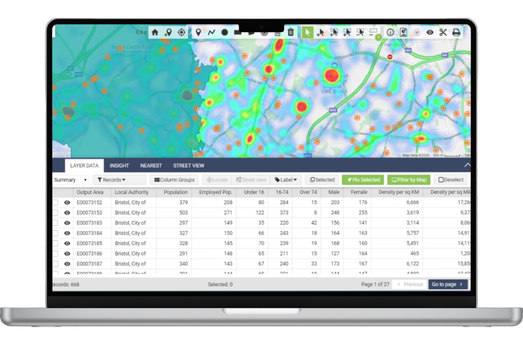
Smart GIS
TechTIQ Solutions developed Smart GIS, a dynamic location intelligence software that offers advanced geospatial solutions.
Detail

Web Application Development
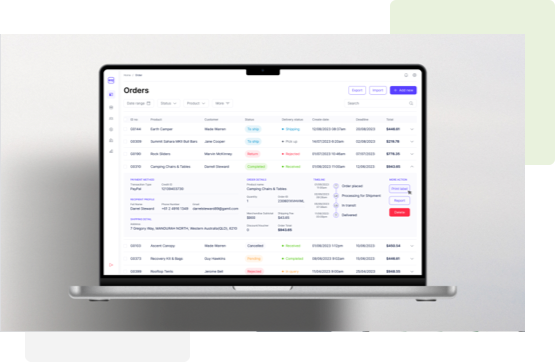
ARB AUSTRALIA
The similarity between the mobile app and its web counterpart can only be guaranteed by using a single source code. Thus, it doesn’t matter if a user is using the app from a mobile device or a desktop computer, they’ll enjoy the same, smooth experience. The necessity for two teams to work on distinct codebases […]
Detail
Technologies We Use










































Key Benefits of Software Maintenance and Support in Singapore
Structured software support and maintenance services change six things in how your business runs.

Lower Total Cost of Ownership
Planned maintenance costs less than emergency fixes. Scheduled patching and refactoring prevent large rebuild projects that follow years of neglect.

Higher System Stability and Uptime
Monitoring and root cause analysis reduce repeat incidents. Systems under active maintenance fail less often and recover faster when they do.

Predictable Monthly Support Costs
Maintenance becomes a fixed line item instead of an unplanned expense. You know what you spend each month and what that spend covers.

Security and Compliance Currency Under PDPA
Regular patching keeps known vulnerabilities closed. Change logs and access records give you the audit trail PDPA requires when handling personal data.

Extended System Life and Delayed Replacement Cost
A maintained system stays useful for years longer. You delay the cost and disruption of a full rebuild until the business actually needs one.

Engineering Capacity Returned to Your Roadmap
Your developers stop firefighting. Support tickets and patching move to our team, so your engineers spend their time on the features that grow revenue.
See What Maintenance Would Change for Your System
Share your system details and we will show you the fastest path to stability.
Request a Quote

Our Software Maintenance and Support Process in Singapore
Taking over someone else's system is the hardest part of maintenance work. These five steps are how we do it without breaking anything.

Step 1: Discovery and System Health Audit
We review your codebase, infrastructure, dependencies, and open issues. You receive a written assessment covering code quality, security exposure, and the risks that need attention first.

Step 2: Knowledge Transfer and Handover
We collect credentials, environment details, and any existing documentation. Where your team has context, we capture it in sessions. Where documentation is missing, we write it.

Step 3: Stabilization and Backlog Triage
We fix the issues causing the most disruption and clear the critical security patches. Remaining items go into a priority backlog agreed with your team.

Step 4: Ongoing Maintenance and Monitoring
Monitoring and alerting go live. We handle incoming tickets, apply patches on schedule, and respond to incidents within the agreed priority levels.

Step 5: Continuous Improvement and Reporting
We report on system health each month and recommend the next improvements. Over time, the work shifts from fixing problems to preventing them.
Industries We Serve in Singapore
We maintain business-critical systems across regulated and high-volume sectors.

Healthcare
Patient management systems, clinical data platforms, and appointment engines maintained with strict controls around personal health data.

Banking and Financial Services
Core banking integrations, regulatory reporting engines, and internal risk platforms maintained to MAS technology risk management expectations.

Fintech
Payment processing engines, digital wallet backends, lending decision systems, and KYC workflows kept current with provider and regulatory changes.

Logistics and Supply Chain
Warehouse management systems, fleet tracking backends, and order routing platforms supported for uptime during peak operating hours.

Retail
POS integrations, inventory management systems, and loyalty platforms maintained so stock data and transactions stay accurate across locations.

Education
Student information systems, learning platform backends, and assessment engines supported through enrolment periods and academic cycles.

Real Estate
Property management platforms, agent CRM systems, and transaction workflow tools maintained for data accuracy and reporting reliability.

Insurance
Policy administration systems, claims processing engines, and quotation platforms maintained with attention to calculation accuracy and audit trails.

Manufacturing
Manufacturing systems often run on older technology that still works. We keep MES platforms, ERP integrations, and shop floor tools stable while planning safe upgrades.
Our Related Articles

 Dec 17, 2025
FAQs
What are the four types of software maintenance?


The four types are corrective, adaptive, perfective, and preventive. Corrective fixes defects. Adaptive updates the system for external changes. Perfective improves performance and usability. Preventive reduces future failure risk through refactoring and better test coverage.
What is the difference between software maintenance and support?
Maintenance changes the code through bug fixes, patches, and improvements. Support helps users through ticket handling, troubleshooting, and service restoration. Most businesses need both. Our software maintenance and support model in Singapore combines them so the same team diagnoses and fixes issues.
How much do software maintenance services cost in Singapore?
Cost depends on system size, technology stack, required response times, and coverage hours. Most businesses budget 15 to 20 percent of the original build cost per year. We provide a fixed quote after the initial system audit.
What service levels and response times will we get?
Response times depend on incident priority. Critical production outages receive the fastest response, with lower priority items handled within standard business hours. We agree exact targets with you before support begins.
How long does knowledge transfer take when you take over a system?
Most handovers take two to four weeks. Well-documented systems move faster. Large legacy systems with no documentation take longer. We start handling low-risk tickets during this period so support coverage is not delayed.
Should we keep software support and maintenance in-house or outsource it?
Keep it in-house when the system is central to your product and you have stable engineering headcount. Outsource software support and maintenance when maintenance work is pulling your developers away from the roadmap or when coverage gaps create risk.
Get a Support Plan Built Around Your System
Send us your system details and get a maintenance plan built for your business in Singapore.
