


You have run one or two pilots. Both demoed well, then stopped moving. Usually, there is no agreed standard for going live, so nobody can say whether the pilot is safe to release.
-
OVERVIEW
-
SERVICES
-
WHY CHOOSE US ?
-
MODEL
-
TECHNOLOGIES
-
OUR PROCESS
-
FAQS
What Is AI Transformation?
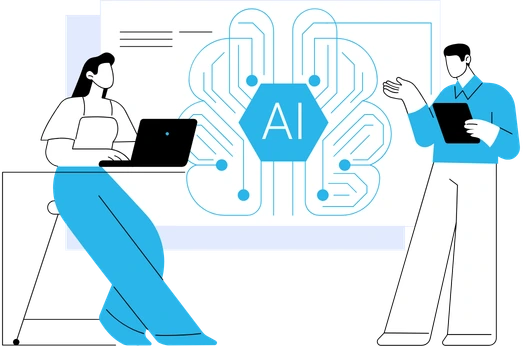
AI transformation is the work of changing how your business runs, with AI built into everyday workflows rather than sitting beside them.
The easiest way to see it is by comparison. Building a chatbot is a project with a start and an end. Changing how your operations team decides what to prioritize each morning is AI business transformation.
That difference shapes what the work involves. Someone has to decide which processes AI should touch first, and which ones it should stay away from. Your data has to be usable before a model can learn anything from it. Someone has to own the decision when AI gets something wrong. And your team has to actually change how they work, or the tool ends up unused.
None of those four things is a technology problem. This is why AI programs stall far more often than they fail.
AI transformation deals with that gap. It puts the four in sequence, so each one is settled before the next depends on it.

350+
Skilled software engineers delivering excellence

8+
Years of dedicated industry experience

800+
Successfully software development projects

4
Offices in Asia
Signs Your Business Needs AI Transformation Services
These five patterns show up in most companies that have tried AI and not yet seen a return.

AI Pilots That Never Reach Production

Data Scattered Across Systems
Customer records sit in one system, operations in another, finance in a third. Pulling a single report already takes manual work. A model trained on that data inherits every gap and duplicate in it.

No Policy on AI Use
Staff are already using public AI tools for real work. Nobody has said which data is allowed to leave the company, and nobody checks the output before it reaches a client.

Competitors Deciding Faster
A competitor responds to a quote request in hours while you take days. The gap is rarely talent. It comes from decisions being supported by data that is ready to use.

Teams Unsure Which Processes AI Should Handle
Sales wants lead scoring, support wants a bot, finance wants forecasting. Each request sounds reasonable on its own. Without a way to weigh cost against business value, the budget spreads thin and none of them gets far enough.
Stuck at the AI Pilot Stage? Let's Move You Forward.
Send us your pilot and the systems behind it. We will tell you what is blocking production, and what it takes to get past it.
Talk to Our AI Experts

Our AI Transformation Services in Singapore
Our AI transformation services in Singapore cover seven areas, run in sequence or as standalone engagements.

AI Readiness Assessment
We score your readiness across data, systems, skills, and governance. The output is a short report showing where you stand today and which gaps block your first production use case. Most assessments take two to three weeks.

AI Use Case Prioritization
We run workshops with each department to collect every request, then score them on business value against effort. You end up with a ranked shortlist and a clear reason why the top three come first. Common results include an AI agent for internal workflows or a forecasting model for operations.

AI Transformation Roadmap
We turn that shortlist into a funded plan. The AI transformation roadmap sets phases, budget, team, and success criteria for each stage, so your board can approve it and your delivery team can act on it.

AI Data Transformation
We audit whether your data is good enough for the use cases you chose. This covers quality, coverage, access rights, and labeling. Where the data falls short, we define the work needed to fix it before any model is trained.

AI Governance and Risk
We set the rules for how AI operates in your business. That includes approval steps, human review points, bias checks, and audit logs. For Singapore companies, we align this with the IMDA Model AI Governance Framework and PDPA obligations.

Workforce and Operating Model
We design how your organization runs AI long-term. This covers roles, an internal AI team, and training so staff can use AI in daily work. Change management sits inside this stage rather than being added at the end.

Pilot to Production Scaling
We define what a pilot must prove before it goes live, then set the path to roll it out to other teams. Where build work is needed, our AI development team delivers it.
Ready to Build Your AI Roadmap?
Start with a readiness assessment. In three weeks you will know where AI transformation in Singapore pays off, and where it does not.
Talk to Our AI Experts

Key Benefits of AI Transformation in Singapore
Companies that run AI as a program, not a series of pilots, see gains in six areas. Each one builds on the work done in the stage before it.

Faster, Better Decisions
Teams stop waiting on manual reports. Forecasts, pricing, and prioritization run on current data, so decisions that took days now take hours.

Lower Operating Costs
Routine work moves to AI, and your senior people spend their time on cases that need judgment. Savings come from redeployed hours, not headcount cuts.

Higher Return on AI Investment
Funding follows a ranked use case list instead of departmental requests. Projects that cannot show a business case do not get started, so budget goes where the return is clearest.

Compliance You Can Evidence
Approval steps, review points, and audit logs are in place before AI touches customer data. When a regulator or client asks how a decision was made, you have the answer on record.

Scalable AI Adoption Across Departments
Each use case ships with training and a defined owner. What works in one team can move to the next without starting the whole process again.

Stronger Internal AI Capability
Your staff learn to run and question AI systems, not just use them. Over time, your internal team carries more of the work and depends less on outside help.
Why Choose TechTIQ Solutions for AI Transformation Services in Singapore?
Choosing an AI transformation partner in Singapore usually comes down to one question: who is still involved when the first use case goes live? For TechTIQ Solutions, it is the same team that wrote the roadmap.
 Experienced Singapore-Based Team
Our consultants have spent years taking systems into production for clients in regulated industries. That background shapes how we scope AI work, because we have already seen which parts tend to break at scale.
Strategy and Delivery in One Team
The people who write your roadmap stay with you through delivery. You avoid the gap that opens when a consulting firm passes its work to a separate development vendor.
Flexible Engagement Models
Begin with a fixed-scope assessment, expand into a phased program, or embed our specialists inside your team. Each option can scale up or pause as your priorities shift.
Agile and Transparent Process
Work runs in short cycles, and every cycle ends with something you can review. Funding for the next phase is approved once you have seen what the last one produced.
Cost-Effective Without Cutting Corners
You get senior consultants at rates well below the large advisory firms. Savings come from running lean teams and reusing frameworks we have already tested on live engagements.
Alignment with IMDA and PDPA Requirements
Governance is designed around Singapore rules at the start of the engagement. We map approval steps, human review points, and audit trails to the IMDA Model AI Governance Framework and your PDPA obligations.
ISO-Certified Quality and Security Standards
TechTIQ Solutions holds ISO certification for both quality and security processes. This becomes important the moment AI systems begin handling customer records or feeding regulated reporting. Learn more about us.
Consistent On-Time Delivery
Every phase carries a defined output and a committed date. Progress is measured against those milestones, so you always know where the program stands.



Trusted By








Hear It Straight From Our Clients
TechTIQ Solutions Pte Ltd has delivered a functional app that has significantly improved the user experience and performance of the platform. The team has been responsive and proactive, and internal stakeholders are particularly impressed with the service provider's code quality.
Andrew Simpson
CEO, HeartSciences

The dedication of the TechTIQ Solutions Pte Ltd's team was truly remarkable.
Manuel Trigueiros Rafael Ferreira de Lemos
Co-Founder & CEO, Enline Energy Solutions
TechTIQ Solutions' team was full of software development and communication experts, which I found rare in other companies.
Richard Hopper
CFO, Transportation Services, Inc. (TSI)
Our AI Transformation Case Studies
Offshore Dedicated Team
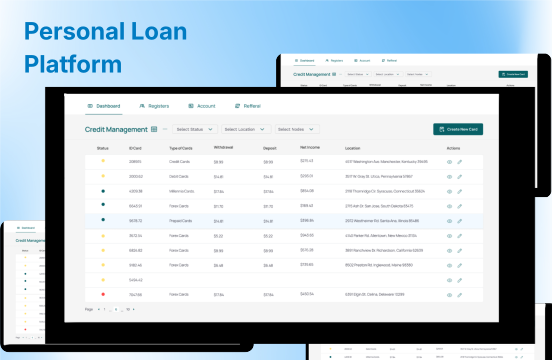
Personal Loan Platform
TechTIQ Solutions developed a comprehensive Personal Loan Platform, enabling institutions, health insurance funds, and individuals.
Detail

Offshore Dedicated Team
KNOWLEDGEONE CORP
TechTIQ Solutions collaborated with Knowledgeone Corporation to enhance their software development and services. Learn more!
Detail
Offshore Dedicated Team
Jumar Staffing
TechTIQ Solutions collaborated with Jumar, a UK-based digital services provider, to establish an Offshore Development Center (ODC).
Detail
Web Application Development
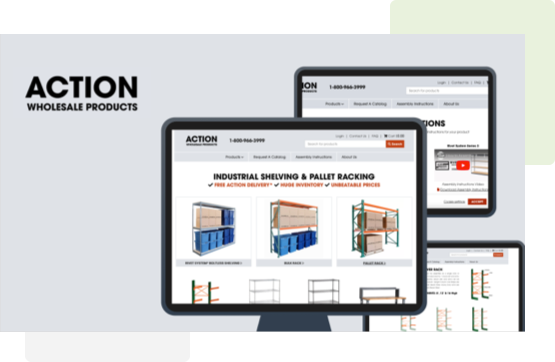
ActionWP Platform
TechTIQ Solutions modernized ActionWP with improved UI, speed, and features through expert web development in Singapore.
Detail
Offshore Dedicated Team
HoloLens
This revolutionary program combined the capabilities of computer vision and mixed reality to present users with a unified and immersive augmented reality experience. Scan Environment, Measure Straight Line, Measure Area, Measure Room, Detect Text, Read Text, and Detect Objects were just some of the ways the HoloLens software brought the real world to life and […]
Detail
Web Application Development
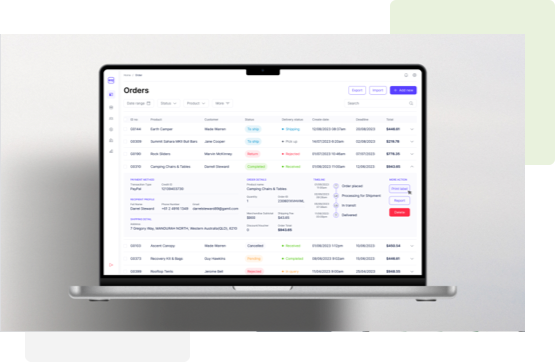
ARB AUSTRALIA
The similarity between the mobile app and its web counterpart can only be guaranteed by using a single source code. Thus, it doesn’t matter if a user is using the app from a mobile device or a desktop computer, they’ll enjoy the same, smooth experience. The necessity for two teams to work on distinct codebases […]
Detail
Mobile App Development

LUXASIA
Luxasia is a renowned omni-channel that specializes in facilitating the buying and selling of diverse luxury products. It has established itself as an emblematic entity in Singapore, with a mission to bridge the gap between brands and end-users.
Detail
Web Application Development
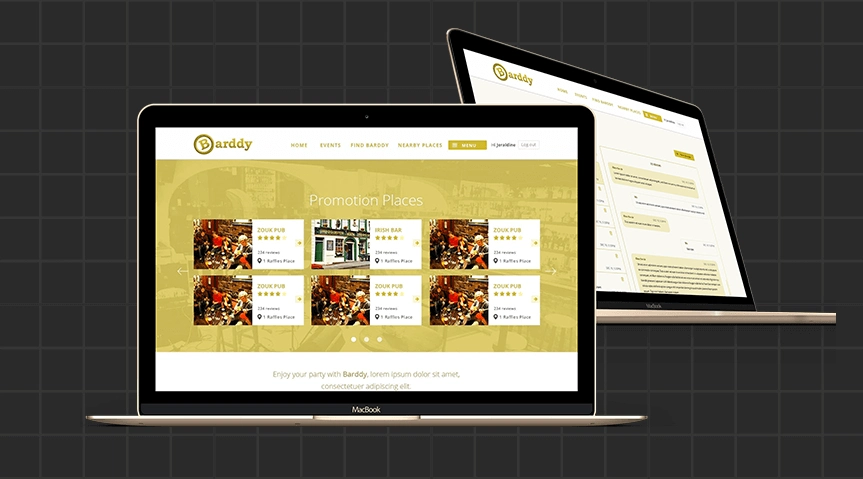
Barddy
Explore pubs, nearby clubs . Events with barddy. News, reviews from newest places search nearby, advanced options. Find the pub that fit to you.
Detail
Technologies We Use














































Our Engagement Models
TechTIQ Solutions provides three engagement models, so you can match the commercial terms to the size of the program ahead. As an experienced AI transformation company in Singapore, we price each one based on scope, team seniority, and how long you need us involved.

Staff Augmentation
Best when you already have an internal AI lead and need specific skills alongside them. We place consultants, data specialists, or AI engineers into your team, and they report through your existing structure. You scale the number up or down as each phase demands.

Dedicated Development Team
Best for multi-phase programs where several use cases run in parallel. You get a stable team covering strategy, data, and delivery, working only on your roadmap. This model suits enterprise AI transformation programs that run across twelve months or more.

Fixed Price Model
Best for work with a clear boundary, such as a readiness assessment, a use case prioritization workshop, or a governance framework. You agree the scope, deliverables, and cost upfront, so budget approval is straightforward. Assessments typically run two to three weeks.
Not Sure Where to Start with AI? Let's Talk.
Book a short call with our AI transformation consultants and leave with a clear view of what your first phase should cover.
Discuss Your Project
Our AI Transformation Approach in Singapore
TechTIQ Solutions runs every engagement in five steps, with a decision point at the end of each one. You choose whether to continue before any further budget is committed.

Step 1: Readiness Assessment and Discovery
We start with interviews across your leadership, IT, and operations teams, then review the systems behind them. Not every process is worth automating, so part of the assessment is telling you which ones to leave alone. Two to three weeks in, you receive a scored picture of where the organization stands.

Step 2: Use Case Prioritization and Business Case
Department heads join a series of short workshops where every AI request gets put on the table. We attach numbers to each one, and the shortlist that comes out carries a business case your finance team can check.

Step 3: Roadmap, Governance, and Data Foundation
Here we draft a custom AI strategy built around your industry, your systems, and the use cases you ranked in Step 2. TechTIQ Solutions writes it as a plan your board can approve, covering phasing, budget, approval rules, human review points, and the data cleanup each use case depends on.

Step 4: Pilot Delivery and Validation
The first use case goes live with a small group of users and a defined set of success criteria. Results are measured against the business case from Step 2, which tells you whether to scale it or stop.

Step 5: Scaling, Enablement, and Continuous Improvement
Once a use case proves itself, we roll it out to the remaining teams and train the people who will run it daily. Adoption rates and business results are tracked against the original case, and the AI transformation strategy gets reviewed each quarter as conditions change.
Industries We Serve in Singapore
Each sector faces a different first obstacle with AI, whether that is regulatory scrutiny, scattered data, or workforce resistance. We shape AI transformation solutions in Singapore around the constraint that matters most in your industry.

Healthcare
Patient data carries the strictest handling rules in the market. We keep clinical decision support under human review and design AI workflows that satisfy MOH requirements and PDPA obligations.

Banking and Financial Services
Credit scoring, fraud detection, and client onboarding all draw regulatory attention when AI is involved. We align model governance with MAS expectations on fairness, ethics, accountability, and transparency.

Insurance
Underwriting and claims automation face direct scrutiny on bias. We design review checkpoints so every automated decision can be traced back and explained.

Public Sector
Agencies need decisions that citizens can challenge. We build audit trails into every automated step and align governance with the IMDA Model AI Governance Framework and AI Verify testing.

Professional Services
Contract review, research, and document drafting are already changing across legal and accounting firms. We set the rules on client confidentiality first, then decide which work AI should support.

Education
Institutions want AI for admissions, tutoring, and administration without losing academic integrity. We define where automation helps and where a person stays in the loop.

Logistics and Supply Chain
Route planning, demand forecasting, and warehouse allocation depend on data spread across carriers and partners. We consolidate that layer before any model touches it.

Manufacturing
Predictive maintenance and quality inspection deliver returns quickly once machine data is usable. We assess sensor coverage and data history before committing to a timeline.

Retail and E-Commerce
Personalization and pricing models work only when customer consent is properly recorded. We set the data rules first, then rank the use cases worth funding.
Our Related Articles
 Oct 01, 2026

FAQs
What is the difference between AI transformation and digital transformation?


Digital transformation moves manual processes onto digital systems, such as cloud platforms, ERP, and automated workflows.
AI transformation goes further by letting those systems learn from data and support decisions.
Most companies need a working digital transformation foundation before AI transformation delivers results.
What is the difference between AI transformation and AI development services?
AI development builds a specific solution, such as a chatbot or a forecasting model.
AI transformation services decide which solutions to build, in what order, and under what rules. Transformation covers strategy, governance, data readiness, and adoption across the organization.
How long does an AI transformation program take?
A readiness assessment takes two to three weeks. The first pilot usually reaches production within three to four months. Full programs covering several departments typically run twelve to twenty-four months, delivered in phases with a decision point at the end of each one.
How much does AI transformation consulting cost in Singapore?
Cost depends on scope and organization size. A fixed-price readiness assessment is the lowest entry point for AI transformation consulting and gives you a scored report plus a ranked use case list. Full programs are quoted after scoping, and most clients fund them phase by phase rather than upfront.
Does my business need clean data before starting AI transformation?
No. Data readiness is part of the work, not a prerequisite. The assessment identifies which datasets are usable now and which need cleanup. We sequence use cases so early wins run on your strongest data while weaker sources are being fixed.
How do you measure the ROI of AI transformation?
Each use case carries a business case with baseline numbers agreed before the pilot starts. After launch, results are measured against that baseline. Common metrics include hours saved, error rates, processing time, and revenue influenced by AI-supported decisions.
How do I evaluate an AI transformation proposal?
Check four things. Does it name specific use cases with expected returns, or only general capability? Does it include governance and training, or only technology? Are phases separated by decision points? Does the team writing the strategy also deliver it?
How do I manage change during AI transformation?
Start before the first tool ships. Name an owner in each affected team, explain which tasks AI takes over, and keep people involved in decisions about their own work. Successful AI transformation for business in Singapore treats training and communication as part of delivery, never as a final step.
Start Your AI Transformation Journey Today
Tell us where your AI work stands, and our Singapore team will map your first phase.
