


Web Design vs Web Development: Which One Do You Need?

 Updated on Oct 02, 2026
What is the difference between web design vs web development? Many people use these two terms as if they mean the same thing. In fact, they cover very different work. This confusion can lead to costly mistakes. Some businesses in Singapore hire a designer when they need a developer. Others pay for coding work when the real problem is a confusing layout. The result is wasted budget, delayed launches, and a website that fails to perform. Understanding the difference helps you avoid these mistakes and invest in the right skills for your project.
TechTIQ Solutions is a leading web design and web development company in Singapore. We work with both designers and developers every day. In this guide, we explain what each role covers, how they work together, and how their salaries compare.
What Is Web Design?
Web design is the process of planning how a website looks and feels. It covers layout, colors, fonts, images, and overall visual experience. A web designer decides where each element sits on the page and how users move through the site. The goal is to make the website attractive, easy to use, and aligned with the brand.
Good web design does more than make a site look nice. It shapes how visitors feel about a business within seconds. Research from Stanford shows that 75% of users judge a company’s credibility based on its website design. In a competitive market like Singapore, first impressions can decide whether a visitor stays or leaves.
What Does a Web Designer Do?
A web designer focuses on the visual and experience side of a website. Their daily work often includes:
- Creating wireframes and mockups: Designers sketch the structure of each page before any visual details are added.
- Choosing colors, fonts, and imagery: These elements reflect the brand and guide user attention.
- Designing user interfaces (UI): Designers craft buttons, menus, forms, and other elements that users interact with.
- Planning user experience (UX): They map out how visitors move through the site to complete actions, such as making a purchase or filling out a form.
- Ensuring responsive design: A website must look good and work well on desktops, tablets, and smartphones.
Website designers do not write the code that powers a website. Instead, they hand their designs to developers, who turn those designs into a working product.
Types of Web Designers
Web designers often specialize in one of three areas:
- UI designers focus on the look of individual elements. They design buttons, icons, menus, and layouts that are clear and visually consistent.
- UX designers focus on how the website feels to use. They study user behavior, build user flows, and remove friction from the journey.
- Visual designers combine both roles. They handle the overall aesthetic while keeping the experience smooth and intuitive.
Many designers in smaller teams cover all three areas. Larger projects often need dedicated specialists for each role. This is why many businesses partner with professional UI/UX design services in Singapore instead of building an in-house design team.
Skills and Tools Web Designers Use
A skilled web designer combines creative and analytical skills. The most important ones include:
| Skills | Tools |
| Visual design principles (layout, color theory, typography) | Figma, Sketch, Adobe XD |
| Wireframing and prototyping | Balsamiq, InVision, Axure |
| Responsive and mobile-first design | Webflow, Framer |
| Basic knowledge of HTML and CSS | Chrome DevTools |
| User research and usability testing | Hotjar, Maze, Google Analytics |
Designers do not need deep coding skills. However, a basic understanding of HTML and CSS helps them create designs that developers can build without problems.
What Is Web Development?
Web development is the process of building a website that actually works. It turns a designer’s mockups into a live, functional product. A web developer writes the code that powers every page, button, form, and database behind the scenes. The goal is to make the website fast, secure, and stable across all devices.
If web design shapes what users see, web development shapes what users can do. A beautiful design means little if pages load slowly, forms break, or the checkout fails. In Singapore, where users expect fast and seamless online experiences, solid development work directly affects trust and sales.
What Does a Web Developer Do?
A web developer focuses on the technical side of a website. Their daily work often includes:
- Writing code: Developers use languages like HTML, CSS, JavaScript, PHP, and Python to build website features.
- Turning designs into working pages: They convert wireframes and mockups from designers into functional web pages.
- Building and managing databases: Websites need databases to store products, user accounts, and orders.
- Integrating third-party services: Developers connect websites with payment gateways, shipping tools, and CRM systems.
- Testing and fixing bugs: They test features before launch and fix issues that appear after the site goes live.
- Maintaining site performance and security: Regular updates keep the website fast and protected from threats.
Website developers do not create the visual design. They take what designers produce and make it real through code.
Types of Web Developers
Web developers usually fall into three groups:
- Front-end developers build the parts users see and interact with. They work with HTML, CSS, and JavaScript to bring designs to life in the browser.
- Back-end developers build the systems behind the scenes. They handle servers, databases, and application logic using languages like PHP, Python, or Node.js.
- Full-stack developers handle both sides. They can build a complete website from the user interface to the server and database.
Small projects often rely on one full-stack developer. Complex projects, such as ecommerce platforms or web applications, usually need separate front-end and back-end specialists working as one team.
Skills and Tools Web Developers Use
A capable web developer combines technical depth with problem-solving skills, supported by the right web development tools. The most common ones include:
| Skills | Tools and Technologies |
| Front-end coding (HTML, CSS, JavaScript) | React, Vue.js, Angular |
| Back-end programming | Node.js, PHP, Python, .NET |
| Database management | MySQL, PostgreSQL, MongoDB |
| Version control and collaboration | Git, GitHub, GitLab |
| Testing and debugging | Chrome DevTools, Jest, Postman |
| Deployment and hosting | AWS, Azure, Docker |
Developers do not need strong visual design skills. However, an eye for detail helps them match the final product to the designer’s original vision.
What Is the Difference Between Web Design vs Web Development?
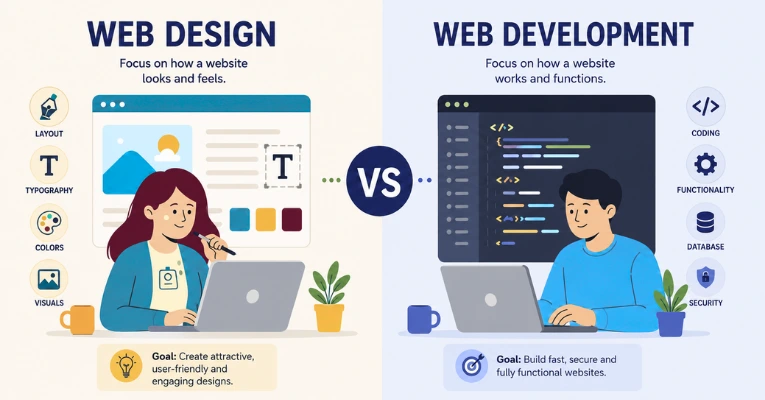
The difference between web design vs web development comes down to focus. Design covers how a website looks and feels. Development covers how it functions. One discipline works on the surface that users see. The other builds the engine underneath.
Here is a quick comparison of web design vs development across the areas that matter most:
| Aspect | Web Design | Web Development |
| Main focus | How the website looks and feels | How the website works and performs |
| Core work | Layout, colors, fonts, UI, UX | Coding, databases, integrations, testing |
| Common tools | Figma, Sketch, Adobe XD | HTML, CSS, JavaScript, PHP, Python |
| Key deliverables | Wireframes, mockups, prototypes, style guides | Working web pages, databases, and technical documentation |
| Success metrics | Engagement, bounce rate, conversions | Page speed, uptime, security, functionality |
| Typical timeline | 2 to 4 weeks | 4 to 12 weeks |
| Relative cost | Lower | Higher |
| Coding required | No (basic HTML/CSS is a plus) | Yes |
1. Looks vs Function
Web design shapes the visual side of a website. Designers decide the layout, colors, fonts, and imagery that create the first impression. Their work answers one question: does this site look right and feel easy to use?
Web development shapes the working side. Developers make sure pages load, forms submit, and payments go through. Their work answers a different question: does this site do its job without errors?
Both matter. A site that looks great but breaks often will lose visitors. A site that works well but looks outdated will struggle to earn trust.
2. Visuals vs Code
Designers work with visual tools. They spend their days in Figma, Sketch, or Adobe XD, creating wireframes, mockups, and prototypes. They are not expected to write code.
Developers work with programming languages. They spend their days writing HTML, CSS, JavaScript, and back-end code. They are not expected to create visual assets.
This split defines the workflow in most website design and web development projects. Designers hand over approved mockups. Developers turn those mockups into a live website. Clear handoff between the two keeps projects on schedule.
3. Deliverables and Success Metrics
Each role produces different outputs and gets measured in different ways:
- Designer deliverables: wireframes, mockups, prototypes, style guides, and design systems.
- Developer deliverables: working web pages, databases, integrations, and technical documentation.
- Design success metrics: engagement, bounce rate, time on page, and conversion from visual improvements.
- Development success metrics: page speed, uptime, security, and error-free functionality.
When you review a project proposal, check both sets of deliverables. A complete website design and web development package should list visual assets and technical outputs clearly.
4. Timelines and Costs
Design and development follow different schedules and price ranges.
Design usually comes first and takes less time. A typical design phase runs two to four weeks for a standard business website. Development takes longer, often four to twelve weeks, depending on features and integrations.
Costs follow a similar pattern. In most projects, website development costs more than website design because it involves more hours and deeper technical work. Complex features like custom databases, payment systems, or third-party integrations increase development costs further.
Read more: How Much Does a Website Cost in Singapore in 2026?
What Do Web Design and Web Development Have in Common?
Web design vs web development differ in focus, but they share the same goal. Both exist to create a website that attracts visitors and turns them into customers. Neither can deliver that result alone.
The two disciplines overlap in two important ways.
Both Shape the User Experience
User experience does not belong to designers alone. Both roles shape how visitors feel when they use a website.
Design affects the experience through layout, readability, and visual flow. A clear menu and a clean page help users find what they need quickly.
Development affects the experience through speed, stability, and smooth interactions. A page that loads in under three seconds keeps users engaged. A checkout that works on the first try builds trust.
Google reflects this shared responsibility in its ranking factors. Core Web Vitals measure loading speed, interactivity, and visual stability. These metrics depend on both design decisions and development work. Strong performance in one area cannot cover for weakness in the other.
Both Depend on Each Other to Build a Successful Website
A website needs both disciplines to succeed. Design without development is just a picture. Development without design is a working product that no one enjoys using.
The best results come when designers and developers collaborate throughout the project, not just at handoff. For example:
- Designers who understand technical limits create mockups that developers can build without rework.
- Developers who understand design intent preserve spacing, animations, and visual details in the final code.
- Regular check-ins between both sides catch problems early, before they become expensive to fix.
This is why many businesses prefer to work with a web development and design agency rather than hiring separate freelancers. When one team handles both sides, communication gaps shrink and projects move faster.
Web Development vs Web Design Salary: How Do the Two Compare?
Salary is one of the most searched topics when people compare these two careers. It also matters for business owners because salary levels shape hiring costs and project budgets. This section covers the web development vs web design salary picture in Singapore, from both angles.
Web Designer Salary Ranges in Singapore
Web designers in Singapore earn an average monthly salary of SGD 3,600 to SGD 5,200, according to Jobstreet (July 2026). Broken down by experience level:
- Junior web designer (0 to 2 years): SGD 2,000 to SGD 3,600
- Mid-level web designer (3 to 5 years): SGD 3,600 to SGD 5,200
- Senior web designer or UI/UX lead (6+ years): SGD 5,200 to SGD 6,800
Designers with strong UX research skills or design system experience tend to sit at the higher end of each range. Demand for UX specialists keeps growing as more companies invest in user experience.
Web Developer Salary Ranges in Singapore
Web developers in Singapore generally earn more than designers at the same level. (Source: Jobstreet)
- Junior web developer (0 to 2 years): SGD 2,500 to SGD 3,700
- Mid-level web developer (3 to 5 years): SGD 3,700 to SGD 6,000
- Senior or full-stack developer (6+ years): SGD 6,000 to SGD 8,300
Back-end and full-stack developers usually earn more than front-end developers. Skills in cloud platforms, security, and popular frameworks push salaries higher.
When you compare web design vs web development salaries, the two start at similar levels. The gap widens with experience. At the senior level, developers earn around 15% to 20% more than designers. The difference reflects the technical depth that senior development roles require.
How Do Web Designers and Web Developers Work Together?
Web design and web development are separate skills, but a website project needs them to run as one process. In a well-run project, designers and developers collaborate at every stage, not just at handoff. This is how the workflow looks in practice:
- Discovery and planning: Both teams join early sessions to understand the business goals, target users, and technical requirements.
- Wireframing with developer input: Designers create the layout while developers confirm what is technically feasible within the budget and timeline.
- Visual design: Designers build the full visual identity. Regular check-ins keep the designs buildable.
- Development in stages: Developers turn approved designs into working pages. Designers review each stage to protect visual details.
- Testing and refinement: Both teams test together, fix bugs, and polish the experience before launch.
- Launch and ongoing support: After go-live, both sides monitor performance and make data-driven improvements.
When these steps happen inside one team, projects move faster and fewer details get lost between design and code.
Case Study: Peptalk Website Redesign and Rebuild
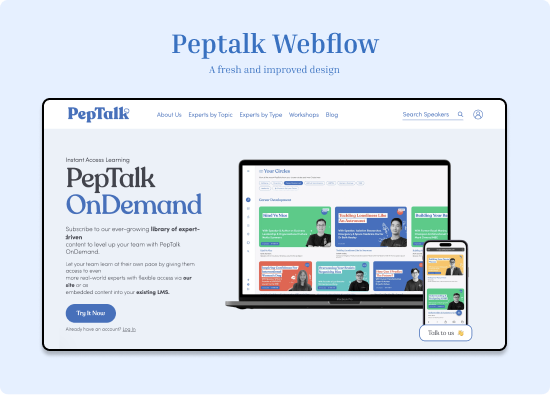
Peptalk, a UK-based company, came to TechTIQ Solutions with a common problem. Their existing website no longer reflected the quality of their brand or the experience they wanted to deliver.
The challenge: Peptalk wanted a highly interactive landing page that could engage visitors and drive more traffic. The interactions had to feel smooth and purposeful without slowing the page down. This required design and development to work in sync because every animation decision affected both the visual experience and page performance.
The integrated solution: Our team redesigned and rebuilt the website on Webflow. Designers and developers worked side by side throughout the project. Each interaction was designed to guide user attention and then built with Webflow’s native animation tools to keep load times fast. A dedicated project manager, two developers, and a quality control engineer kept communication clear and delivery on schedule, despite the time zone gap with the UK.
The result: Peptalk launched a clean, interactive website that better represents their brand and supports their growth goals. Our company also provides ongoing maintenance support, so the site stays fast and stable after launch.
What Are the Future Trends in Web Design and Web Development?
The line between web design vs web development keeps shifting as new tools change how websites get built. Three trends stand out in Singapore in 2026, and each one affects how businesses should plan their next website project.
AI and Automation
AI now supports both sides of website work. Designers use AI tools to generate layouts and test visual directions faster, while developers use AI assistants to write routine code and catch bugs earlier.
AI is one of the biggest web development trends shaping how projects run in 2026. It produces starting points, not finished products, so human judgment still shapes the final result. For businesses, the real benefit is speed and better value within the same budget.
Low-Code and No-Code Platforms
Platforms like Webflow, Framer, and Bubble let teams build websites with less manual coding, which blurs the traditional split between web design vs development roles.
Many Singapore SMEs choose this route to launch faster and cut maintenance costs. These platforms suit marketing sites and landing pages well, but complex features and deep integrations still need traditional development.
Design Systems and Closer Collaboration
A design system is a shared library of components, styles, and rules that both designers and developers follow. Instead of handing off static mockups, both roles work from the same source. The result is faster delivery, consistent branding, fewer handoff errors, and new pages that stay consistent with the original design years after launch.
Web Design vs Web Development: Which One Should You Choose?
The answer depends on where your website stands today and what problem you need to solve. Some projects only need design work. Others only need development. Many need both.
Use the three scenarios below to find where your project fits.
When You Need Web Design
Choose web design services in Singapore when your website works fine technically but fails to impress or convert. Common signs include:
- Your website looks outdated compared to competitors.
- Visitors leave quickly without taking action.
- The layout feels cluttered or confusing to navigate.
- Your branding has changed, and the website no longer matches it.
- The site looks broken or awkward on mobile devices.
The mobile point matters more in Singapore than in most markets. Singapore has one of the highest smartphone penetration rates in the world, and most local users browse and shop on their phones. A website that fails on mobile loses a large share of potential customers.
In these cases, a designer can refresh the visual identity, improve the user experience, and rebuild trust with your visitors. The underlying code stays mostly the same.
When You Need Web Development
Choose web development services in Singapore when your website looks acceptable but does not function the way your business needs. Common signs include:
- Pages load slowly or crash under traffic.
- You need new features, such as a booking system, member portal, or payment integration.
- Your site has security issues or runs on outdated technology.
- You want to connect your website with other tools, like a CRM or inventory system.
- Forms, search, or checkout functions keep breaking.
For Singapore businesses, two local factors often trigger development work. First, integrating local payment methods such as PayNow and GrabPay requires proper development support. Second, if your website collects customer data, it must comply with the Personal Data Protection Act (PDPA). Secure forms, consent management, and safe data storage all fall under development work.
In these cases, a developer can fix the technical foundation, add the features you need, and keep the site secure and stable.
When You Need Both Web Development and Web Designing
Most major website projects need website design and website development together. This applies when:
- You are building a new website from scratch.
- You are rebranding and want the site to reflect the new identity inside and out.
- Your current website is too old to salvage, and a full rebuild costs less than patching it.
- You are launching an online store or web application.
For projects like these, hiring one integrated team usually works better than hiring a designer and a developer separately. One team means one timeline, one point of contact, and no communication gaps between design and code.
There is also a cost advantage for local SMEs. Eligible Singapore businesses can tap on government grants, such as the Productivity Solutions Grant (PSG), to offset part of the cost of approved digital solutions. A full design and development project becomes more affordable when grant support covers a portion of the investment.
If you are still unsure which path fits your situation, talk to a web design and development company in Singapore like TechTIQ Solutions. A short consultation helps you scope the work and get a clear cost estimate before you commit to anything.
Frequently Asked Questions (FAQs)
What is web development vs web design in simple terms?
Web design covers how a website looks: layout, colors, fonts, and user experience.
Web development covers how a website works: coding, databases, and functionality.
A designer plans what users see, and a developer builds what makes it run. Most complete website projects need both skills.
Can one person handle both web design and web development?
Yes, some professionals handle both. They are often called design-developer hybrids or full-stack designers. This works for small, simple websites. For larger projects, split roles deliver better results because each discipline requires great, dedicated skills. Most agencies assign separate specialists who work as one team.
Is web design or web development harder to learn?
Neither is harder overall, they demand different strengths. Web design requires visual thinking, creativity, and user empathy. Web development requires logical thinking, patience, and comfort with programming languages. Development usually takes longer to learn because coding has a steeper starting curve, but mastering design takes just as much practice.
Should a business hire a web design and web development company or separate freelancers?
For most businesses, one integrated company works better. A web development and design agency manages both sides under one timeline with one point of contact. Freelancers can cost less for small tasks, but coordinating with a separate designer and developer adds communication risk, delays, and quality gaps.
Conclusion
Web design vs web development is not a choice between two rivals. Design shapes how your website looks and feels. Development makes it fast, secure, and functional. A successful website needs both to work as one team.
Before your next project, review where your current site falls short.
- If the problem is visual, start with design.
- If the problem is technical, start with development.
- If you are building something new, plan for both together.
TechTIQ Solutions helps businesses in Singapore handle both sides in one engagement, backed by an experienced team of designers and developers.
Ready to build a website that looks great and works even better? Contact us today for a free consultation.


Related articles

What Is Inventory Management Software and How Does It Work?
 Wei Kiong Tan
  08 Aug 2026
PoC vs MVP vs Prototype: What’s the Difference?
03 Jul 2026 
Top 10 Programming Languages for Software Development in 2026
27 Jun 2026 
Top 10 .NET Development Companies in Singapore for 2026
23 Jun 2026 
Native Mobile App Development: Everything to Know in 2026
19 Jun 2026 
10 Web Security Best Practices for Singapore Startups and SMEs in 2026
15 May 2026 
10 Minimum Viable Product Examples for Startups That Want to Win Early
10 May 2026 
What Is Web Design? A Complete Guide for Businesses
07 May 2026 
50 Best App Ideas for Startups and Entrepreneurs to Build in 2026
02 May 2026 


