


What Is The Difference Between Web App Vs Mobile App?

 Updated on Oct 01, 2026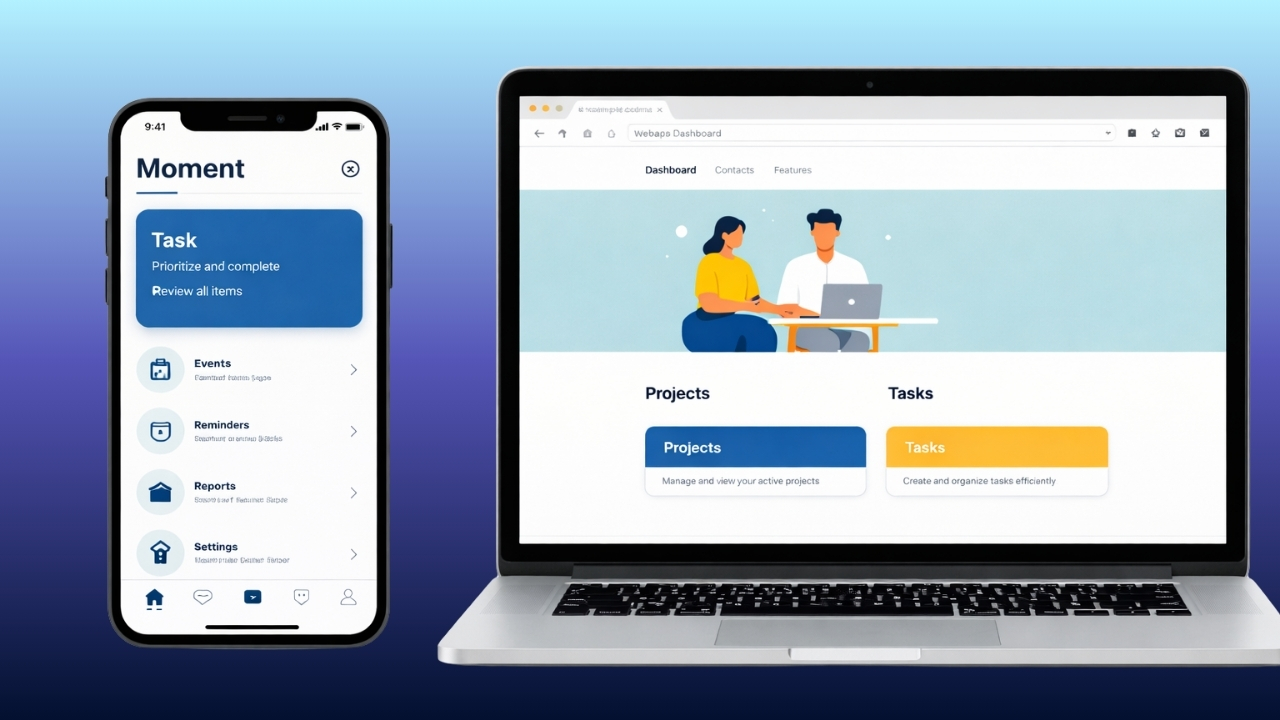
Choosing the right digital product can directly impact growth, customer engagement, and long-term scalability, especially for fast-moving markets like Singapore and Southeast Asia. One of the most common questions businesses face today is web app vs mobile app: which option delivers better performance, reach, and return on investment?
In this guide, we compare mobile app development vs web development, highlight where each excels, and share how to choose the best solution for businesses in Southeast Asia.
Web App vs Mobile App: Quick Comparison Overview
| Factor | Web App | Mobile App |
|---|---|---|
| Platform | Runs in web browsers on desktop, tablet, and mobile devices | Built specifically for mobile operating systems such as iOS and Android |
| Installation | No installation required — accessed through a web URL | Downloaded and installed from app stores |
| Performance | Good performance, depending on the browser and the internet connection | Generally faster with direct access to device hardware |
| Development Cost | Typically lower with a single codebase for all platforms | Usually higher due to platform-specific or cross-platform development |
| Maintenance | Updates are deployed instantly for all users | Updates require app store approval and user downloads |
| User Experience | Responsive design adapts across different screen sizes | Optimized for mobile gestures, animations, and native UI components |
| Offline Access | Limited offline support based on caching and service workers | Strong offline capabilities supported by the operating system |
| Security | Relies on browser security, HTTPS, and server-side protections | Uses OS-level security features along with app-specific controls |
| Discoverability | Indexed by search engines and easily shareable via links | Primarily discovered through app stores and in-app promotion |
Quick takeaway:
If reach, speed to market, and lower cost matter most, a web app vs mobile app decision often leans toward web apps. For performance-heavy features and deep mobile engagement, mobile apps usually win.
What Is a Web Application?
A web application is an interactive software program that runs in a web browser rather than being installed on a user’s device. It allows users to perform actions such as creating accounts, submitting forms, managing data, making purchases, and collaborating online in real time.
In the mobile web vs mobile app discussion, web apps are valued for their broad accessibility, faster deployment, and lower development complexity.
How a Web Application Works
Web applications operate using a client-server model. The user interacts with the app through a browser, while a remote server processes requests, manages databases, and handles business logic.
When a user clicks a button or submits information:
- The browser sends a request to the server
- The server processes the data
- The updated content is returned instantly
This structure allows web apps to scale easily and receive updates without requiring user downloads.
Programming Languages and Tech Stack
Web applications use HTML, CSS, and JavaScript to run in web browsers. Frameworks like React, Vue, and Angular help create fast and interactive interfaces.
On the server side, developers commonly use Node.js, Python, PHP, or Java to handle data and business logic. Databases such as MySQL, PostgreSQL, and MongoDB store application information.
Most web apps run on cloud infrastructure and connect to external services through APIs for scalability and performance.
Common Examples of Web Applications
- Online banking platforms
- E-commerce stores and booking systems
- Customer relationship management (CRM) tools
- Cloud-based productivity software
- Learning management systems
Pros |
Cons |
|---|---|
| Accessible across all devices through a web browser | Limited access to device hardware features |
| Lower development and maintenance costs | Performance depends on the browser and the internet quality |
| Instant updates without user downloads | Offline functionality is usually restricted |
| Easy to scale and maintain from a central server | Less optimized for advanced mobile interactions |
What Is a Mobile Application?
A mobile application is a software program designed to run directly on smartphones and tablets. It is downloaded and installed from app stores and built specifically for mobile operating systems such as iOS and Android.
In the web app vs mobile app comparison, mobile apps are known for higher performance, stronger offline capabilities, and deeper device integration.
How a Mobile Application Works
Mobile apps run directly on a device’s operating system instead of through a browser. They use the phone’s hardware and system resources to process tasks locally while connecting to servers for data syncing and updates.
When users open an app, it loads instantly, retrieves data when connected to the internet, and continues functioning even with limited connectivity in many cases.
Programming Languages and Tech Stack
Mobile applications are built using platform-specific or cross-platform technologies. Native iOS apps commonly use Swift, while Android apps use Kotlin or Java.
Cross-platform frameworks such as Flutter and React Native allow developers to build one app for multiple platforms. Mobile apps connect to cloud servers, APIs, and databases to store data and sync content.
Common Examples of Mobile Applications
- Social media apps
- Ride-hailing and delivery apps
- Mobile banking apps
- Fitness and lifestyle apps
Pros |
Cons |
|---|---|
| High performance with direct device hardware access | Higher development and maintenance costs |
| Optimized for mobile user experience and gestures | Requires installation and regular updates |
| Strong offline functionality | Limited visibility outside app stores |
| Supports push notifications and background services | Approval processes required for app store publishing |
Read more: What Is Mobile App Development? A Complete Step-by-Step Guide (2026)
Web App vs Mobile App: What Are the Core Differences?
Once you understand how each platform works, the real distinction becomes clear in how they perform, scale, and support business goals. Below are the most important differences that shape the web development vs mobile app development decision for companies in Singapore and across Southeast Asia.
1. Performance and Speed
Mobile applications usually run faster because they are installed directly on the device and can use system resources efficiently. Web applications depend on browsers and internet connections, which may slow performance in areas with weaker network coverage.
2. User Experience
Mobile apps are designed specifically for touch interactions, gestures, and smaller screens. This results in smoother navigation and stronger user engagement. Web apps use responsive layouts to adapt across devices, which is flexible but often less immersive.
3. Development Cost
Web applications generally cost less to build since one version works across multiple devices. Mobile applications often require separate development for iOS and Android or additional cross-platform tools, increasing time and budget.
4. Maintenance and Updates
Web apps are easier to maintain because updates happen instantly on the server. Users always access the latest version. Mobile apps require app store approvals and user downloads for each update.
5. Accessibility and Reach
Web applications can be accessed through any browser and discovered via search engines. This makes them easier to reach new users quickly. Mobile apps rely on app store visibility and user installs.
6. Offline Capability
Mobile applications can function offline by storing data locally and syncing later. Web applications offer limited offline features and usually require internet access for full functionality.
7. Security
Mobile apps benefit from built-in operating system security, such as biometric login and secure storage. Web apps rely on browser protections, encryption, and server security measures. Both can be secure when properly developed.
Read more: Mobile App Security in Singapore: What Businesses Need in 2026
Web App vs Mobile App: Which Is Better for Your Business?
For businesses in Singapore and across Southeast Asia, the right choice of mobile app vs mobile web app depends on budget, speed to market, customer behavior, and long-term growth plans. Both platforms can succeed, but they serve different strategic needs.
Best Choice for Startups
Web applications are often the smarter starting point for early-stage companies. They are faster to launch, more affordable to build, and easier to update as business models evolve.
For Singapore startups testing ideas, acquiring early users, or pitching to investors, web apps reduce risk while still delivering a professional digital product.
Best Choice for E-commerce
Web applications are often the best starting point for e-commerce businesses because customers can shop instantly without downloading anything. This works especially well in Singapore and Southeast Asia, where many users discover products through search engines and social media links on their phones.
Mobile applications become more useful as brands grow and focus on repeat purchases, loyalty programs, personalized offers, and push notifications.
Best Choice for SaaS Platforms
SaaS products usually perform best as web applications first. Business users prefer browser-based tools that work across devices without installation.
Once user bases grow, mobile apps can be added to support notifications, approvals, and on-the-go access.
Best Choice for Content-Based Platforms
News sites, learning platforms, and community portals often benefit from web apps due to easy sharing, SEO visibility, and low user friction.
Mobile apps work well when daily engagement and personalized experiences become priorities.
Best Choice for High-Performance Needs
Industries such as fintech, logistics, ride services, and healthcare typically require fast performance, offline access, and hardware integration. In these cases, mobile applications usually deliver better reliability and user experience, making mobile app development in Singapore a common strategic choice.
How to Choose the Right Web or Mobile App
Choosing between web app development vs mobile app development depends on your business goals, target users, budget, and technical requirements. There is no universal best option; the right solution is the one that aligns with how your customers in Singapore and Southeast Asia discover, use, and interact with digital products.
For many businesses, a web app is the most practical starting point. Web applications are faster to launch, more affordable to develop, and easier to maintain. Users can access them instantly through a browser without installing anything, which reduces friction and helps reach a wider audience through search engines and social media.
Mobile apps become a stronger choice when performance, offline access, and deeper user engagement are essential. Businesses that need real-time features or device functions like GPS, camera, and biometric login often choose native solutions such as iOS app development in Singapore and Android app development in Singapore.
Maintenance is another important factor. Web apps allow you to update one version for all users instantly, while mobile apps require platform-specific updates and app store approvals. This can affect how quickly you can release new features or fix issues.
Looking long term, many Singapore companies successfully start with a web app to validate demand and control costs, then expand into mobile apps as their user base grows and engagement increases. This phased approach balances speed, budget, and scalability.
Conclusion
Choosing between a web app vs mobile app depends on your business goals, budget, and how customers interact with your product. Web apps offer faster launch and wider reach, while mobile apps provide stronger performance and deeper engagement.
For many Singapore businesses, starting with a web app and expanding to mobile later is a cost-effective and scalable approach.
At TechTIQ Solutions, we help companies choose between a mobile app vs web app and build the right digital solutions based on real business needs, ensuring long-term growth and efficiency. If you’re exploring a web or mobile app for your business, you can contact us to get practical advice tailored to your goals. The best choice is the one that aligns with your strategy today and scales for tomorrow.
FAQs
Can a web app be a mobile app?
A web app can function on mobile devices through a browser and can feel similar to a mobile app with responsive design or progressive web app technology. However, it is not the same as a native mobile app and has limited access to device hardware and offline features.
For full performance, deeper device integration, and stronger user experience, a native mobile app is still the better option.
Is it cheaper to run a website or an app?
In most cases, a website or web app is cheaper to run because it uses a single platform and simpler maintenance. When comparing mobile app development vs web development, web solutions usually require lower ongoing costs.
Mobile apps tend to cost more to maintain due to platform-specific updates, app store management, and performance optimization for iOS and Android.
How much does it cost to turn a website into an app?
The cost depends on features, complexity, and whether the app is a simple wrapper or a fully native build. Basic conversions are usually cheaper, while custom mobile apps with offline access, integrations, and advanced functionality cost more.
In many cases, businesses start with a web app and later invest in a full mobile app as user demand grows.
Are mobile apps more secure than web apps?
Mobile apps often offer stronger built-in security through operating system features such as biometric login and secure data storage. Web apps rely on browser protections, encryption, and server-side security measures.
Both can be highly secure when properly developed, but mobile apps provide tighter control over device-level security.
Should businesses build both a web app and a mobile app?
Many businesses start with a web app to launch quickly, control costs, and reach users easily. As engagement grows, they add a mobile app to improve performance, loyalty, and user experience. This phased approach balances affordability with long-term scalability.
When should you choose to build a native app instead of a mobile web app?
You should choose a native app when high performance, offline access, and deep device integration are essential. In the native mobile app vs mobile web application comparison, native apps are better for features like push notifications, GPS, camera access, and secure authentication.
Mobile web apps work well for quick access and lower development cost, but they offer fewer advanced capabilities.
How do you decide if your idea should be a mobile app or a web app?
To decide between a web app vs mobile app, start by looking at user behavior, budget, and required features. Web apps are better for fast launch and wide accessibility, while mobile apps are ideal for high performance, offline use, and frequent engagement. The right choice depends on how customers will use your product and how quickly you need to scale.
Who earns more, a web developer or an app developer?
Salaries vary by region, experience, and skill level, but mobile app developers often earn slightly more due to the strong demand for native app development skills. Complex iOS and Android projects typically require specialized expertise.
Experienced web developers with full-stack and cloud skills can earn comparable or even higher salaries in some roles.


Related articles

Web Design vs Web Development: Which One Do You Need?
 Bruce Pham
  13 Jul 2026
PoC vs MVP vs Prototype: What’s the Difference?
03 Jul 2026 
Top 10 Programming Languages for Software Development in 2026
27 Jun 2026 
Top 10 .NET Development Companies in Singapore for 2026
23 Jun 2026 
Native Mobile App Development: Everything to Know in 2026
19 Jun 2026 
10 Web Security Best Practices for Singapore Startups and SMEs in 2026
15 May 2026 
10 Minimum Viable Product Examples for Startups That Want to Win Early
10 May 2026 
What Is Web Design? A Complete Guide for Businesses
07 May 2026 
50 Best App Ideas for Startups and Entrepreneurs to Build in 2026
02 May 2026 


