


What Is Inventory Management Software and How Does It Work?

 Updated on Aug 08, 2026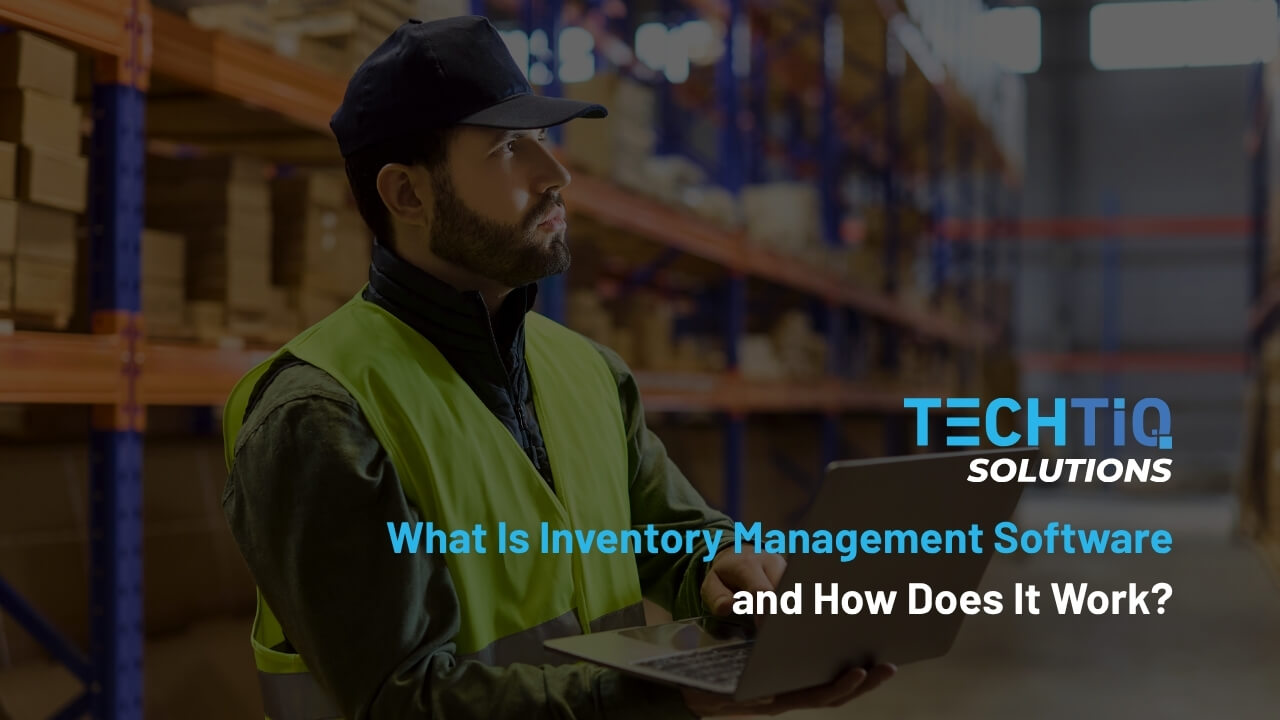
Inventory management software helps businesses track stock levels, manage orders, and control inventory costs in real time. Without it, managing stock across multiple locations and sales channels in Singapore becomes error-prone and expensive.
Manual processes cannot scale. Miscalculations lead to stockouts during peak demand or excess stock that ties up working capital. Both scenarios hurt your bottom line directly.
At TechTIQ Solutions, we help Singapore businesses implement the right inventory management system for their operations. This guide covers what inventory management software is, how it works, and what features to look for when choosing a solution.
Key Takeaway
- Inventory management software tracks stock levels, orders, and inventory movements across all your locations in real time, replacing manual spreadsheets and disconnected records.
- Set automated reorder points for every SKU to trigger stock alerts and purchase orders automatically before inventory runs out.
- Look for core features including real-time stock tracking, barcode scanning, multi-location inventory management, and ERP and POS system integration before choosing a solution.
- Singapore businesses managing multiple locations, sales channels, or suppliers benefit most from a centralized system over manual processes.
- When off-the-shelf solutions cannot support your workflows, a custom-built inventory system gives you full ownership and flexibility to scale.
What Is Inventory Management Software?
Inventory management software is a digital system that helps businesses track stock levels, manage orders, and monitor inventory movements across locations. It replaces manual spreadsheets and disconnected records with a single, centralized inventory database that updates in real time.
At its core, the software connects every stage of your inventory cycle. From the moment stock enters your warehouse to the point it reaches the customer, every movement is recorded, tracked, and reportable.
Key Inventory Management Statistics 2026
- Retailers worldwide lose an estimated $1.7 trillion a year to inventory distortion, the combined cost of out-of-stocks and overstocks. (Source: IHL Group, 2025)
- 7 out of 10 warehouse associates and decision-makers agree that inaccurate inventory and out-of-stocks are a major challenge to productivity. (Source: Zebra Warehousing Vision Study, 2023)
- The global inventory management software market was valued at $3.7 billion in 2025 and is projected to reach $7.1 billion by 2033, growing at a CAGR of 8.9%. (Source: Grand View Research, 2026)
- 91% of warehouse decision-makers plan to invest in technology to increase supply chain visibility by 2028. (Source: Zebra Warehousing Vision Study, 2023)
- AI-based inventory forecasting can reduce supply chain forecasting errors by 20–50% and cut overall inventory levels by 20–30%. (Source: McKinsey & Company, 2022)
How Does Inventory Management Software Work?
Inventory management software works by tracking every stock movement through a connected, automated workflow. From the moment goods arrive at your warehouse to the point an order ships to a customer, the system records and updates inventory data at each step.
Here is how the process works in practice.
Stock Intake and Barcode Scanning
When new stock arrives, the system records it through barcode scanning or QR code scanning. Each product is matched to its SKU in the inventory database and assigned to a specific location within your warehouse.
Quantities update instantly, and your stock records reflect the new arrival without any additional manual input from your team.
Real-Time Inventory Tracking
Once stock is logged, the system tracks every movement continuously. Sales, transfers between locations, returns, and adjustments are all reflected immediately in your real-time inventory tracking dashboard.
Your team gets a live view of stock levels across every warehouse, retail outlet, or fulfillment center at any given moment. For Singapore businesses operating across multiple locations, this visibility prevents the common problem of overselling stock that has already been allocated elsewhere.
Automated Reorder Points and Stock Alerts
Inventory management software allows you to set minimum stock thresholds for every product. When levels drop to that threshold, the system automatically triggers a stock alert or generates a purchase order for the supplier.
You can configure automated reorder points based on lead times, seasonal demand, and historical sales velocity to keep stock levels accurate at all times.
Inventory Reporting and Analytics
Every transaction feeds into your inventory reporting and analytics module. The system pulls data from every stock movement, purchase order, and adjustment to generate a complete picture of inventory turnover rate, slow-moving stock, dead stock, and overall inventory health.
Reports can be scheduled automatically or generated on demand.
What Are the Key Features of Inventory Management Software?
The right inventory management software does more than count stock. It connects every part of your inventory operation into one system. Here are the core features to look for when evaluating a solution for your business.
Real-Time Stock Tracking
Real-time stock tracking gives your team an accurate, live view of inventory levels at all times. Every sale, return, transfer, and adjustment updates the system automatically, without manual input.
This is the foundation of any reliable inventory management system. Without it, stock counts are always running behind actual operations.
Multi-Location Inventory Management
Multi-location inventory management allows businesses to track and sync stock across multiple warehouses, retail outlets, and fulfillment centers from a single dashboard.
For Singapore businesses operating across several locations or regional distribution points, this feature ensures your team always knows what stock is available and where it is. It eliminates the guesswork that causes overselling or unnecessary replenishment orders.
Purchase Order and Sales Order Management
Purchase order management automates the process of creating, sending, and tracking orders to suppliers. When stock hits a reorder threshold, the system generates a purchase order with pre-populated supplier and product details.
Sales order management works on the other side of the transaction. It tracks customer orders from placement through fulfillment, ensuring stock is allocated correctly and orders ship on time. Together, these two features keep your supply and demand in sync.
Barcode and QR Code Scanning
Barcode scanning and QR code scanning speed up stock intake, picking, packing, and fulfillment. Every scan updates the inventory database instantly, reducing manual data entry errors at every stage of the warehouse process.
Most modern inventory systems support both barcode and QR formats, making it easy to integrate with existing labeling setups.
Automated Reorder Points and Stock Alerts
Automated reorder points let you set minimum stock thresholds for every SKU. When inventory drops to that level, the system triggers a stock alert or auto-generates a purchase order.
This removes the need for manual stock monitoring and ensures replenishment happens on time, based on actual lead times and demand patterns.
ERP and POS System Integration
ERP integration connects your inventory system with your enterprise software, syncing inventory data with finance, procurement, and operations in one place.
POS system integration ensures that every in-store sale updates stock levels instantly across all locations.
For Singapore retailers running both physical stores and online channels, this integration prevents stock discrepancies between channels and keeps your inventory records accurate at all times.
Inventory Reporting and Analytics
Inventory reporting and analytics give managers a clear view of stock performance across the business. Standard reports cover inventory turnover rate, dead stock, slow-moving items, and reorder frequency.
Reports run on a set schedule or can be generated on demand, giving managers the data they need to act quickly on purchasing and storage decisions.
Benefits of Inventory Management Software
The right inventory system delivers measurable improvements across stock accuracy, operational efficiency, and business costs. Here are the key benefits for businesses in Singapore.
Eliminate Stockouts and Overstock
Stockouts and overstock are two of the most common and costly inventory problems. Stockouts result in lost sales and damaged customer trust. Overstock ties up working capital in products that are not moving.
The system addresses both by automating stock monitoring and replenishment. Automated reorder points ensure stock is replenished before it runs out, while demand-based purchasing prevents excess inventory from building up in your warehouse. Hence, your business maintains healthier stock levels without the need for constant manual oversight.
Lower Inventory Costs
Carrying excess inventory is expensive. Warehouse space, insurance, and the risk of dead stock all add up over time.
The right solution reduces these costs by giving you accurate data on what to order, how much, and when. Businesses in Singapore can also reduce the risk of cash flow pressure by maintaining leaner, more accurate stock levels without compromising on product availability.
Better Supply Chain Visibility
Supply chain visibility means knowing the status of every product at every stage, from supplier to warehouse to customer. Without it, delays and discrepancies are difficult to catch early.
The system provides a real-time view of stock movements across your entire operation. For Singapore businesses managing suppliers regionally, this visibility helps identify bottlenecks and respond faster to demand changes. It also supports multi-channel inventory sync, ensuring stock data stays consistent across physical stores and online platforms.
Make Faster, Data-Driven Decisions
The system records every transaction and feeds that data into your inventory reporting and analytics module. Managers can track inventory turnover rate, identify slow-moving SKUs, and monitor demand patterns across product lines.
Instead of relying on estimates, your team works from accurate, up-to-date figures to make purchasing and storage decisions with confidence.
Scale Operations Without Added Complexity
As your business grows, manual inventory processes break down. Adding new products, warehouses, or sales channels creates more data to manage and more room for error.
The right solution scales with your operations. New locations and channels can be added to the same system without rebuilding your workflows. For Singapore businesses expanding regionally across Southeast Asia, this scalability is a significant operational advantage.
Who Needs Inventory Management Software?
Inventory management software is built for any business that buys, stores, and sells physical products. Retailers, e-commerce operators, distributors, wholesalers, manufacturers, and logistics operators all rely on it to keep stock accurate and operations running smoothly.
In Singapore, retailers and e-commerce businesses use it to sync stock across physical stores and online channels simultaneously. Distributors and wholesalers use it to manage high-volume stock movements across multiple warehouse locations. Manufacturers depend on it to track raw materials and finished goods, preventing production delays caused by stockouts.
For Singapore SMEs that have outgrown spreadsheets, inventory management software delivers enterprise-level stock control without the complexity of building a custom system. If your business manages more than one location, sales channel, or supplier, this software is worth evaluating.
How to Choose Inventory Management Software
Choosing the right solution comes down to matching the system’s capabilities to your actual business needs. Here are the key factors to evaluate before making a decision.
1. Define Your Business Requirements First
Start by mapping out your current inventory operation. Consider the number of SKUs you manage, how many locations you operate from, and which sales channels you sell through. A Singapore retailer with a single warehouse has different requirements from a distributor managing stock across multiple fulfillment centers.
2. Check Integration Compatibility
Your chosen solution needs to work with the systems you already use. Check whether the solution integrates with your existing ERP system, POS system, accounting software, and e-commerce platforms. Poor integration means data still has to be entered manually, which defeats the purpose of automating your inventory operations.
3. Evaluate Scalability
The software you choose today needs to support where your business is going, not just where it is now. Evaluate whether the system can handle more SKUs, additional warehouse locations, and higher order volumes over time. For Singapore businesses with regional expansion plans, switching systems mid-growth is costly and disruptive.
4. Compare Pricing Models
Most solutions come in two pricing structures: SaaS subscriptions billed monthly or annually, and custom-built systems that involve a higher upfront cost but give you full ownership of the platform.
For growing businesses in Singapore, calculate the total cost of ownership over two to three years rather than comparing monthly fees alone.
5. Assess Vendor Support and Implementation
Before committing to a solution, check what implementation support the vendor provides, how long onboarding takes, and what ongoing support looks like after go-live. For B2B businesses in Singapore, issues that affect stock accuracy or order fulfillment need to be resolved quickly, and vendor response time directly impacts your operations.
Build a Custom Inventory Management System with TechTIQ Solutions
Off-the-shelf inventory management software works well for standard operations. However, as your business grows, generic solutions often fall short. They may not integrate with your existing systems, support your specific workflows, or scale at the pace your business demands.
At TechTIQ Solutions, we build custom software tailored to how your business actually operates. Whether you need multi-location inventory tracking, automated reorder workflows, ERP integration, or a fully custom inventory reporting and analytics dashboard, we design and develop the solution around your requirements.
Our team has worked with businesses in Singapore across retail, e-commerce, logistics, and distribution. We handle everything from scoping and development through to testing, deployment, and ongoing support.
If your current system is holding your operations back, talk to our team about building a solution that fits.
FAQs
How does inventory management software work with ERP systems?
Most inventory management systems connect with ERP systems through direct integration or API. This syncs inventory data with your finance, procurement, and operations modules in real time.
For Singapore businesses running enterprise-level operations, ERP integration eliminates duplicate data entry and keeps all departments working from the same accurate figures.
What is the difference between inventory management software and a warehouse management system?
Inventory management software focuses on tracking stock levels, orders, and product movements across your business. A warehouse management system (WMS) goes deeper into physical warehouse operations, covering bin locations, pick-and-pack workflows, and labor management.
Some businesses need both. Others find that a robust inventory management system covers their requirements adequately.
How do I choose the right inventory management system for my business in Singapore?
The best fit depends on your business size, number of SKUs, and sales channels. For most Singapore SMEs, a cloud-based solution with multi-location tracking and POS integration covers the core requirements.
Businesses with more complex workflows or custom integration needs may find that a custom-built inventory system delivers better long-term value.
When should a business choose custom inventory software over SaaS?
A SaaS solution works well for standard inventory workflows. However, if your business requires deep ERP integration, custom reporting, or tight supply chain visibility across multiple locations, a custom-built system is worth considering.
For Singapore businesses scaling across Southeast Asia, custom software also provides full ownership and flexibility that subscription platforms cannot match.


Related articles

Web Design vs Web Development: Which One Do You Need?
 Bruce Pham
  13 Jul 2026
PoC vs MVP vs Prototype: What’s the Difference?
03 Jul 2026 
Top 10 Programming Languages for Software Development in 2026
27 Jun 2026 
Top 10 .NET Development Companies in Singapore for 2026
23 Jun 2026 
Native Mobile App Development: Everything to Know in 2026
19 Jun 2026 
10 Web Security Best Practices for Singapore Startups and SMEs in 2026
15 May 2026 
10 Minimum Viable Product Examples for Startups That Want to Win Early
10 May 2026 
What Is Web Design? A Complete Guide for Businesses
07 May 2026 
50 Best App Ideas for Startups and Entrepreneurs to Build in 2026
02 May 2026 


