



eCommerce Mobile App Development: The Definitive Guide for Business Growth in 2026

 Updated on Jan 24, 2026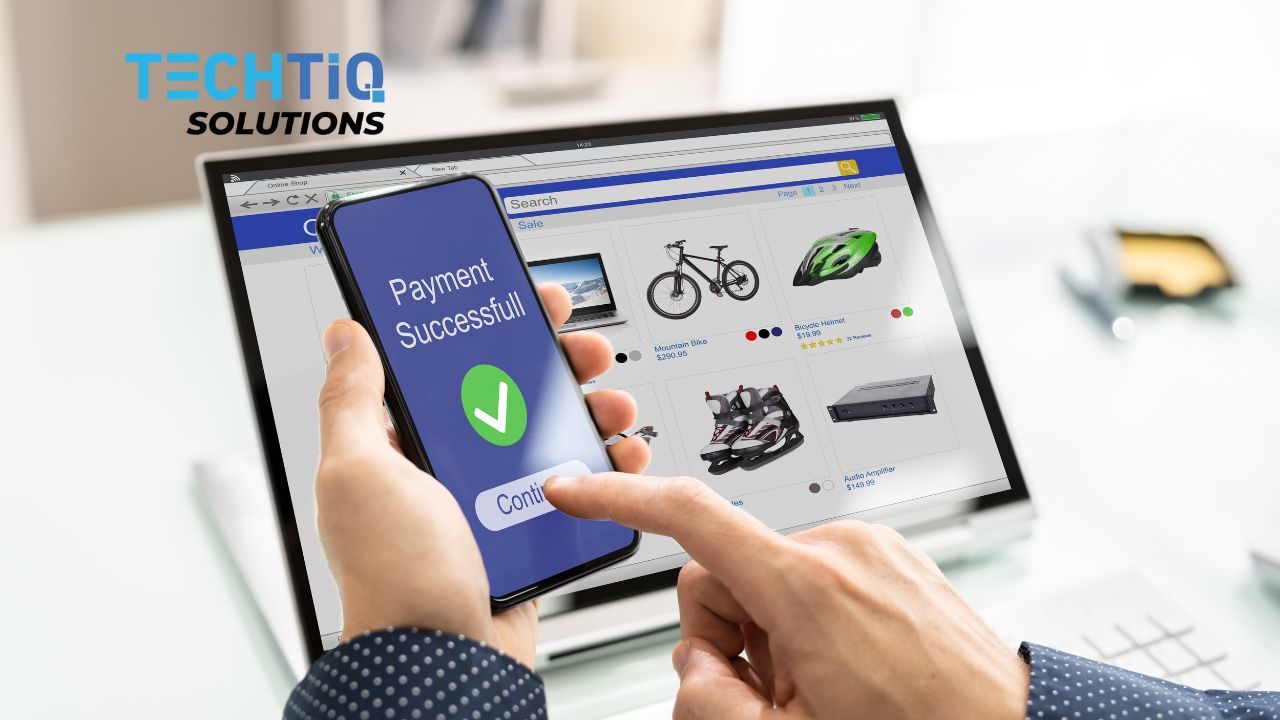
People these days don’t have to go to the store to make purchases. In Singapore, the widespread use of smartphones makes shopping easier and more convenient than ever. The revenue from mobile commerce (M-commerce) reached $2.5 trillion in 2025. Mobile commerce transactions, based on that, have become more popular now.
With the impressive rise of eCommerce, businesses really need a mobile app to join the competition. This article will explain the reasons why you should invest in eCommerce mobile app development. We also include the steps in the development process, future-proofing trends, and a cost breakdown. Keep scrolling down to explore!
Key Takeaways
- eCommerce mobile app development is the process of designing, building, and maintaining mobile applications that allow users to buy and sell products or services directly from their smartphones or tablets.
- Singaporean shoppers prefer easy-to-navigate apps that connect with digital wallets.
- You can build an eCommerce mobile app in 10 steps. The process starts from discovery, and it’s nonstop even when the app goes live.
- AI, AR, and modern technologies shape the eCommerce mobile app development industry in 2026.
What is an eCommerce Mobile App?
An eCommerce mobile app is a dedicated application for mobile devices that allows users to shop right on their handheld devices.
The eCommerce mobile app allows users to browse products, place orders, and make payments digitally. It’s different from mobile web browsing due to the native capabilities for speed. The app can even send push notifications and save user states.
mCommerce refers to the act of buying, selling, and banking goods or services through mobile devices. As the number of smartphone shoppers has increased, most eCommerce transactions are now conducted on mobile. Therefore, the app becomes a crucial endpoint to retain existing customers and access valuable first-party data.
Why Your Business Needs Dedicated Mobile App Development for Ecommerce
YouGov Surveys show that more than 85% of consumers surveyed in Singapore use their smartphones to shop online. Thus, mobile eCommerce app development is absolutely important for business growth in the country in 2026. Mobile apps deliver a deeper business impact than eCommerce web application development. They enable stronger customer loyalty and guarantee higher retention rates via push notifications. The benefits even go beyond those.
Enhanced Customer Experience (CX) and Personalization
A dedicated eCommerce mobile app outperforms a web in terms of speed. Users then have smoother, faster, and more personalized shopping experiences. Moreover, mobile apps can save user preferences. From there, they offer recommendations and push notifications. This mobile personalization is perfect for Singaporean customers who love everything convenient and relevant.
Increased Customer Engagement and Retention
Customer retention through mobile apps is all about continuous interactions. Businesses use push notifications, loyalty programs, and app-only deals to keep customers engaged. And over time, the apps create habitual usage. They make sure that users find sustained value in each visit, giving them an incentive to return.
Competitive Advantage in the Digital Landscape
The Singaporean digital market is super dynamic. If you want to stand out, you will need a powerful eCommerce application with fast checkout and rich features like AR or secure biometrics. It’s the simplest way to keep your brand visible to users. This way, compared to competitors who rely only on mobile web, you gain an edge.
Superior Analytics and User Insights
Mobile apps can act as robust analytics tools. The apps give you deeper, more accurate data than websites. From the apps, you can monitor user behaviors, purchase patterns, funnels, and real-time engagement. Using the analytics, businesses can prepare to enhance marketing and UI/UX design. This data-driven process thus optimizes overall long-run performance.
Increased Sales and Revenue
Apps drive sales directly by increasing the conversion rates. Take, for instance, the modern eCommerce apps and how they are guaranteeing that the checkout flow is seamless to reduce the risk of cart abandonment. Then you can start to drive repeat purchases.
Moreover, digital wallets like PayNow, GrabPay, and Apple Pay are really popular in Singapore. This growth, in turn, leads to stronger spending because shoppers can buy stuff and make payments smoothly. That’s why retail and ecommerce mobile app development is truly necessary for improving financial return.
The Step-by-Step eCommerce Mobile App Development Process
How to develop an eCommerce app? Singaporean businesses need a structured eCommerce application development process. The work starts from strategy to development. All 10 steps are equally important. You need to put effort into each to get a high-performing, scalable, and conversion-driven app in the end.
Step 1. In-Depth Research and Market Analysis
First things first, businesses should understand the market landscape, customer behaviors, and what their competitors are offering. You need to immediately identify target users. Besides, analyze Singaporean shopping patterns and evaluate leading eCommerce apps to spot key gaps and opportunities. Some things to work on here are:
- User surveys
- Competitor benchmarking
- Trend analysis
- SWOT assessments
That sounds a lot, but it sets a strong foundation for every decision you make later. With good analysis, your app can closely match real customer needs and new market expectations.
Step 2: Define Goals and Key Performance Indicators (KPIs)
After getting the big picture for the whole project, you need more specific goals. For example, you may expect your app to increase conversions and enhance customer loyalty. Some businesses simply want to expand into mobile-first markets. KPIs that matter in eCommerce mobile apps are:
- Session duration
- Checkout completion rate
- Retention rate
- User acquisition cost
- Revenue per user
These goals keep stakeholders aligned right from the start. Plus, during the development process, your team knows which features to prioritize. In the long run, well-defined goals also help measure your app’s success.
Step 3: Platform Selection (Native vs. Cross-Platform)
In this stage, you choose between native vs cross-platform development. You develop native mobile apps separately for iOS and Android. eCommerce Android app development is different from iOS development. In either way, you directly access hardware and APIs, making the apps more high-performing. However, the need for separate codebases leads to higher costs.
On the other hand, you use a single, reusable codebase to develop cross-platform mobile apps that can work on multiple platforms. Cross-platform mobile app development frameworks help you save a lot of time and resources, but they don’t have all device features.
For a good decision, you have to think about which device your audience is using. Also consider your budget and what you can handle in long-term upkeep. Your choice now influences the project complexity and user experience later.
Step 4: Define Essential Features and Functionality
This step focuses on the eCommerce mobile app development features. To support seamless shopping, your app should have the essentials like:
- Product catalog
- Advanced search
- Secure checkout
- Payment gateway integration
- Push notifications
- Order tracking
- User profiles
- Digital wallet payments
- Real-time delivery updates
- Localized promotions
The eCommerce app features list prevents scope creep and ensures your development stays efficient and on budget.
Step 5: User-Centric UX/UI Design
A frictionless UX design can raise conversion rates up to 400%. So while planning your development project, focus on its user interface (UI) and user experience (UX) design for mCommerce. Ideally, a good app would not only look nice but also be constructed around the way real users actually engage with things. Remember that Singaporean users expect fast mobile experiences. Some criteria to focus on to achieve this goal are:
- UX: Smooth navigation, clear layout, thumb-friendly actions, and fast loading.
- UI: Branding, color consistency, micro-interactions, and accessible typography.
Step 6: Develop the Minimum Viable Product (MVP)
MVP for eCommerce is a simplified version of the app. MVP only has core features so that you can launch it quickly to gather user feedback. Based on the comments, you validate your idea and refine the app. This way, you know where to focus your app development for full-scale development. Such a nice move to avoid costly missteps!
Step 7: Backend and API Integration
The backend development powers your app’s core operations. You need a secure, scalable backend architecture with seamless API integration for eCommerce. So, the tasks in this stage cover:
- Product data
- User accounts
- Order management
- Payment security
- Integration with payment gateways, CRM, ERP, and logistics platforms
A strong backend makes your app stable and ensures real-time updates for customers. You also need it to keep communication between all necessary systems smooth. Without it, your front-end experience will fail.
Step 8: Testing and User Feedback
Testing is, of course, the best way to ensure that your mobile app runs well across devices and circumstances. The tests include:
- Functional testing
- Usability testing
- Performance testing
- Security testing
- Compatibility testing
At the same time, you need to gather user feedback through beta testing or early-access programs. Then, you can find friction points before the public launch. The ultimate goals are reducing bugs, improving reliability, and building user trust.
Step 9: Pre-Launch Marketing and App Store Optimization (ASO)
In this stage, you focus on crucial pre-launch tasks that people often forget about, such as:
- Making teaser campaigns
- Collecting early sign-ups
- Preparing app store visuals
- Creating keyword-optimized descriptions for App Store Optimization (ASO)
- Planning social media and email funnels
A strong ASO strategy and pre-launch marketing can help increase your app’s visibility. You also need it to accelerate downloads and build initial momentum.
Step 10: App Launch and Continuous Iteration
Once everything is set for the launch, your app can be visible to users. But launch is only the beginning. You must iterate on UX, introduce new features, and improve its payment flow along the way. The aim is to have it be in tune with the changing times of what users expect. That’s the only way to remain competitive and ensure your users get consistent value. The tasks for this stage are:
- Post-launch monitoring
- Bug fixes
- Feature enhancements
- Phase updates
- KPI tracking
- Advanced mobile app security
How Much Does It Cost to Create an eCommerce App?
The eCommerce mobile app development cost is variable, depending on complexity, feature set, chosen platform, and integrations. We categorized costs for the Singapore market as follows:
| Complexity | Estimated Costs |
|---|---|
| Simple Apps | $10,000 – $50,000 |
| Mid-Level Apps | $50,000 – $120,000 |
| Complex Apps | $100,000 – $300,000+ |
The final investment is in your business. You should think about your business goals and identify which features to prioritize. Long-term scalability needs can also affect the eCommerce mobile application development cost.
What to Consider Before Starting Mobile App Development for Ecommerce
Want to kick off your project? But you have to decide the tech stack, think about data security practices, and plan for its long-term scalability. Moreover, Singapore-specific aspects like compliance, digital payment expectations, and high user experience standards will affect your project.
1. Choosing the Right Development Platform/Stack
Do you plan to develop a native or cross-platform app? This comparison table shows the differences between these two options:
| Native Apps | Cross-Platform Apps | |
|---|---|---|
| Tools | Swift (iOS), Kotlin (Android) | Flutter, React Native |
| Performance | Excellent | Good |
| Cost Efficiency | Higher cost | More cost-efficient |
| Development Speed | Slower | Faster |
| Access to Device Features | Full access to native features | Limited compared to native |
| Stability | High stability | Requires continuous updates |
So, each has its own pros and cons. Singaporean businesses have to consider user demographics, preferred device types, and payment integrations. Long-term maintenance requirements also play an important role. The chosen tech stack must support smooth performance, fast loading, and future-ready flexibility.
2. Ensuring Robust Data Security and Compliance
eCommerce mobile app security should be the first priority for you. Companies need to maintain user data securely and block fraud. If they are not, then it will be a loss of trust and eventually a business reputation.
To create a safe app, you have to work on encryption, secure login, and payment protection. On top of it, adhere to Singapore’s PDPA and PCI standards to keep all transactions secure.
3. Planning for Scalability and Future Growth
Expect your eCommerce app to serve customers for a long time. It means the app must support future expansion, like more users, higher traffic, and new features. Moreover, Singapore is known for its fast-evolving digital market. Hence, make sure that the app remains competitive and performance-ready as your business grows.
Singaporean businesses love cloud infrastructure because of its scalability. Modular architecture and flexible APIs are other popular solutions you can consider.
4. Post-Launch Maintenance, Updates, and Support
Ongoing maintenance and support should be what you plan before starting the mobile commerce app development project, not just after launch. You need to prepare financial and resource plans for such tasks.
For example, long-term updates and security patches can’t just take place by themselves. The same for OS changes and period feature enhancements. So, budget for all those services to keep your app functional over time.
Top Trends Shaping eCommerce Mobile App Development in 2026
Singaporean shoppers expect a lot from their shopping experiences in 2026. Thus, businesses should prepare for the upcoming app development trends now because they will lead to better conversion rates and give your business a competitive edge.
Leveraging Big Data for Hyper-Personalization
Singaporean consumers love tailored experiences. Hence, in 2026, data-driven personalization remains important for eCommerce website and app development.
Big data is what you need here. Businesses retrain on data from their mobile apps to understand purchase history, browsing behavior, demographics, and real-time interactions. With access to this valuable information, they can provide tailored content like recommendations, pricing, and offers.
Enhancing Shopping with Augmented Reality (AR) Experiences
Businesses used Augmented Reality (AR) shopping to enhance the visual of their apps at first. But in 2026, AR will become a must-have feature for every eCommerce app. This technology improves product visualization and customer confidence. Imagine how interactive product demos allow users to see 3D models and features. This kind of experience helps them make informed purchase decisions.
So, you should integrate AR capabilities early in the mobile app development process. This way, you can ensure proper UX planning, optimize its performance, and keep it scalable over time.
Streamlining Purchases with One-Click Checkout
Cart abandonment and slow transactions are nightmares in mobile commerce. In the future, businesses plan to use one-click checkout with stored payment and shipping information to remove friction. Streamlined purchases then allow users to complete purchases instantly.
Improving Customer Support with AI Chatbots
AI in eCommerce apps continues to expand because it reduces operational workflows. AI automation also helps improve satisfaction and response times. AI chatbots can be a lifesaver, too, by offering instant, 24/7 support for order tracking and FAQs. Returns and product recommendations become much simpler then.
Integrating Social Media Commerce (S-Commerce)
In 2025, up to 90% of the population in Singapore are social media users. Thus, social commerce integration will be an exciting strategy for eCommerce application development in 2026. Your app can have in-app social feeds and influence content. Users can purchase directly from social platforms, which drives discovery and conversions.
Why Partner with TechTIQ Solutions for eCommerce Mobile App Development
Want to build a powerful eCommerce app, but do not feel confident? Then look for a vendor. As an experienced eCommerce mobile app development company, TechTIQ Solutions can build scalable, secure, and conversion-focused apps tailored for Singaporean businesses.
We cover end-to-end eCommerce mobile app development services, meaning that you have us by your side from strategy and UX design to engineering. Our teams handle integration and long-term optimization as well. Clients love us for our consultative approach and the ability to use modern technologies.
Conclusion
eCommerce mobile app development is booming in Singapore because of the mobile-first users. To stay competitive, businesses really need powerful eCommerce apps with advanced and personalized features.
If you want to join the race of mobile eCommerce development, TechTIQ Solutions can help. Our experience, expertise, and dedication to clients’ success make us stand out in this dynamic market. We offer eCommerce application development services made specifically for your business. Contact us now for expert guidance!
FAQs
How do I choose the right eCommerce mobile app developer for my business?
You can choose the best eCommerce application development company based on these factors:
- Experience
- Portfolio
- Industry knowledge
- Tech stack
- Communication
Should I invest in mobile app development for my startup?
Yes. Mobile app development for eCommerce helps startups engage more customers and boost their brand visibility. It’s especially true in Singapore, where consumers are switching to online shopping for convenience.
What are the unique features of e-commerce mobile applications development?
To create an eCommerce app, you can focus on these features:
- Push notifications
- Custom recommendations
- Advanced payments
- Loyalty programs
- Visual/Voice search
What are the challenges in developing eCommerce mobile apps?
The challenges you may encounter in eCommerce applications development are:
- Security and privacy
- Performance across different screen sizes and devices
- Speed and stability
- Integration with third-party services
- ASO
How long does it take to develop an eCommerce mobile app?
It often takes about 3 to 12 months to create an eCommerce mobile app. We mention a wide range because the development time depends on how complex your app is. For example, a simple product with basic features just needs 3 to 6 months. You can even use an eCommerce mobile app builder to make it faster. Meanwhile, an app with advanced features takes up to 9 months to complete. An experienced partner can offer eCommerce app development services that help you save time.
How to build a social ecommerce mobile app?
You can follow these steps to develop a social eCommerce mobile app:
- Define your goals and target audience
- Research the market and your competitors
- Decide on the features and user flow
- Choose the tech stack
- Develop backend and frontend
- Integrate your app with third-party services
- Test the app thoroughly
- Launch the app
- Maintain and update it regularly


Related articles

Custom Mobile App Development In Singapore: From Planning To Launch (2026)
 Bruce Pham
  25 Dec 2025
What Are the Different Types of Mobile Apps? And How Do You Choose?
15 Dec 2025 
Top 10 Mobile App Development Companies in Singapore (2026 Comparison Guide)
12 Dec 2025 
8 Benefits Of Mobile Apps For Business In Singapore (2026)
11 Dec 2025 
Mobile App Security in Singapore: What Businesses Need in 2026
10 Dec 2025 
How Long Does It Take To Build An App In Singapore
12 Nov 2025 
What Is Mobile App Development? A Complete Step-by-Step Guide (2026)
06 Nov 2025 
The 5 Best Cross-Platform App Development Frameworks In Singapore
05 Nov 2025 
How to Choose the Best Language For iOS App Development
26 Dec 2024 


