



Top 10 eCommerce Platforms in Singapore: The Complete Guide (2026)

 Updated on Jan 27, 2026
You need to access the top ecommerce platforms for the success of your online business in Singapore. According to Statista, this country has experienced a significant development in e-commerce. Up to 27% of respondents make online purchases at least once or twice a month. In 2025, Shopee.sg was recognized as the most visited e-commerce retail website in Singapore. Despite the smaller base than other countries in the region, Singaporean consumers spend more per transaction.
Today, TechTIQ Solutions will guide you through the top ten options to help you find the best ecommerce platform in Singapore. You can discover their special features and strengths in detail. Let’s check!
What is an E-commerce Platform?
An e-commerce platform is the technology that allows businesses to sell products and services online. It handles core functions such as product listings, payment processing, order management, and delivery coordination. In short, it is the backbone of any online store.
Types of E-commerce Platforms
Ecommerce platforms Singapore come in various types, each serving different needs:
- Open-source ecommerce platforms allow you to edit every element of the code. Businesses can download and customize them to meet their specific requirements.
- Website builders with ecommerce features provide an easy-to-use interface. They have drag-and-drop tools, helping businesses to create functional Singapore ecommerce websites without extensive technical knowledge.
- SaaS ecommerce platforms are cloud-based systems that users can access through web browsers.
- Marketplaces (commission-based), like Shopee and Lazada, charge sellers a commission on each deal. They provide extensive tools for sellers to expand their market reach.
- Marketplaces (free) like Facebook Marketplace and Google Shopping allow sellers to list their products for free. Yet, they have to pay for the advertising campaigns.
Top 10 eCommerce Platforms in Singapore
As a leading digital hub, Singapore offers many powerful e-commerce solutions for online businesses. If you are asking “what are the top ecommerce platforms?”, the list below features the most trusted ecommerce solutions in Singapore today.
| Target Audience | Special Features | Strengths | Ease of Use | |
| Shopee | Individual sellers, SMEs, B2C brands | Built-in traffic, mobile commerce tools, integrated logistics | Fast sales, easy setup, strong local reach | Very easy |
| Lazada | SMEs, regional sellers, growing brands | Regional fulfillment, cross-border selling, promotion tools | Strong logistics, brand credibility | Easy |
| Amazon Singapore | Established brands, professional sellers | Fulfillment by Amazon, Prime delivery, trusted marketplace | High conversion rates, fast shipping | Moderate |
| Carousell | Individual sellers, small local businesses | Mobile-first listings, direct buyer chat, local selling | Free entry, strong community | Very easy |
| Shopify | Startups, SMBs, B2B and DTC brands | Hosted website builder, apps, POS, fulfillment, social commerce | Easy to use, full brand control | Easy |
| WooCommerce | WordPress users, developers, content brands | Open-source, full customization, SEO control | Flexibility, cost control | Moderate |
| Wix | Beginners, freelancers, small shops | Drag-and-drop builder, templates, built-in ecommerce | Fast setup, simple management | Very easy |
| BigCommerce | Growing brands, mid to large businesses | Advanced ecommerce tools, SEO, multichannel selling | Strong built-in features | Moderate |
| Squarespace | Creatives, lifestyle brands, small businesses | Design-focused templates, content tools | Visual branding, ease of use | Easy |
| Big Cartel | Artists, creators, small independent brands | Simple store builder, free plan, lightweight setup | Low cost, beginner-friendly | Very easy |
1. Shopee
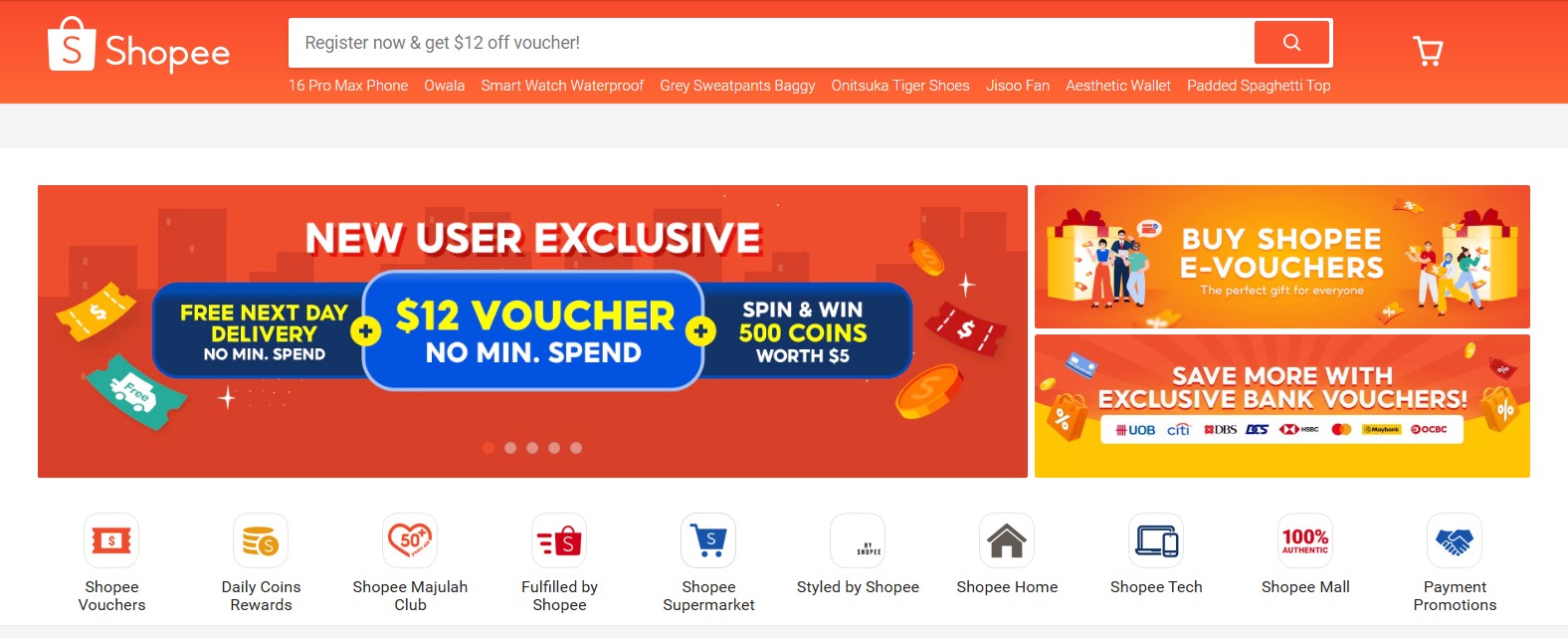
Shopee is the largest and most active online marketplace in Singapore, with millions of daily users browsing across categories such as electronics, fashion, beauty, home goods, and groceries. It is especially popular for mobile shopping and flash deals, making it one of the most powerful customer acquisition channels among ecommerce platforms in Singapore. For new sellers, Shopee offers fast setup and immediate access to high purchase-intent traffic.
Who is Shopee best for?
Shopee is best for B2C and B2B sellers, including individual sellers, small businesses, and established brands looking to reach a large online audience in Singapore.
Why sellers choose it:
- Massive built-in customer base in Singapore and Southeast Asia
- Strong promotional tools that drive visibility and sales volume
- Low entry barrier for new online businesses
- Integrated logistics and payment solutions
Key features:
- Shopee Ads for product ranking and traffic boosting
- Shopee Logistics Service (SLS) with local courier partners
- Support for PayNow, GrabPay, credit cards, and BNPL options
- Campaign tools such as flash sales, vouchers, and bundles
- Seller analytics dashboard for performance tracking
| Pros | Cons |
|---|---|
| Large customer base with high daily traffic | Strong price competition among sellers |
| Easy setup and beginner-friendly tools | Platform fees and advertising costs can increase expenses |
| Built-in logistics and local payment support | Limited control over branding and store design |
| Powerful promotions and campaign features | Sales heavily depend on Shopee’s ranking algorithm |
| Optimized for ecommerce mobile shopping | Limited reach outside Southeast Asia |
2. Lazada
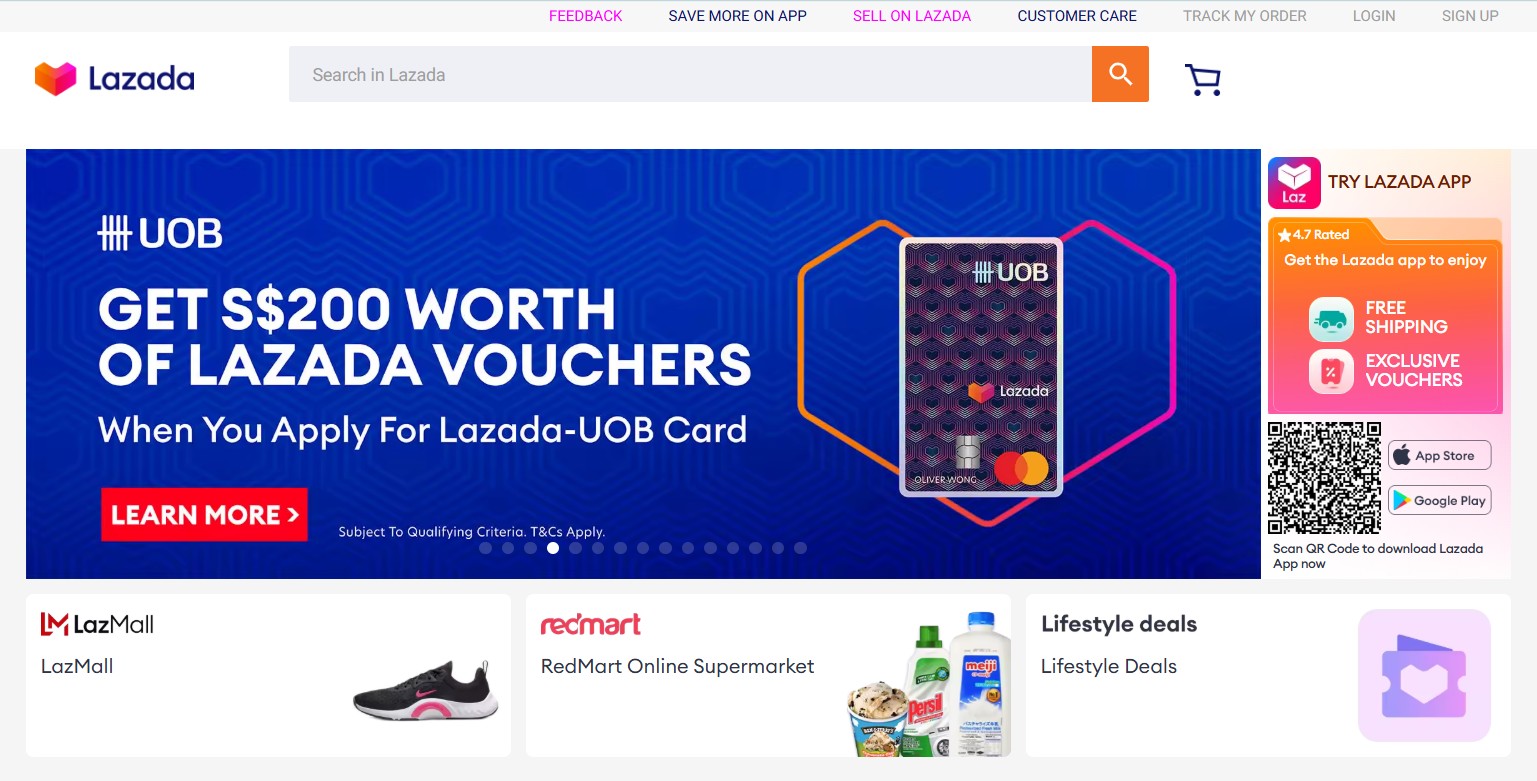
Lazada is one of the largest ecommerce marketplaces in Singapore and across Southeast Asia, known for its strong brand presence, wide product categories, and integrated logistics network. Backed by Alibaba Group, it provides sellers with access to millions of active shoppers and advanced tools to scale online sales efficiently.
Who is Lazada best for?
Lazada is best for SMEs, established brands, and high-volume sellers looking to reach customers across Singapore and the wider Southeast Asian region.
Why sellers choose it:
- Large regional customer base with strong buyer trust
- End-to-end fulfillment and delivery support
- Powerful in-platform marketing and promotion tools
- Cross-border selling capabilities
Key features:
- Lazada Fulfillment (Lazada Logistics and FBL options)
- Integrated digital payments and local payment methods
- Sponsored product ads and brand campaign tools
- Seller Center dashboard with analytics and inventory control
- Mobile-optimized shopping experience
| Pros | Cons |
|---|---|
| Large customer base across Singapore and Southeast Asia | High competition among sellers |
| Strong logistics and fulfillment support | Platform and advertising fees can add up |
| Trusted marketplace with strong brand recognition | Visibility often depends on paid promotions |
| Scalable tools for growing ecommerce businesses | Limited control over store branding |
3. Amazon Singapore
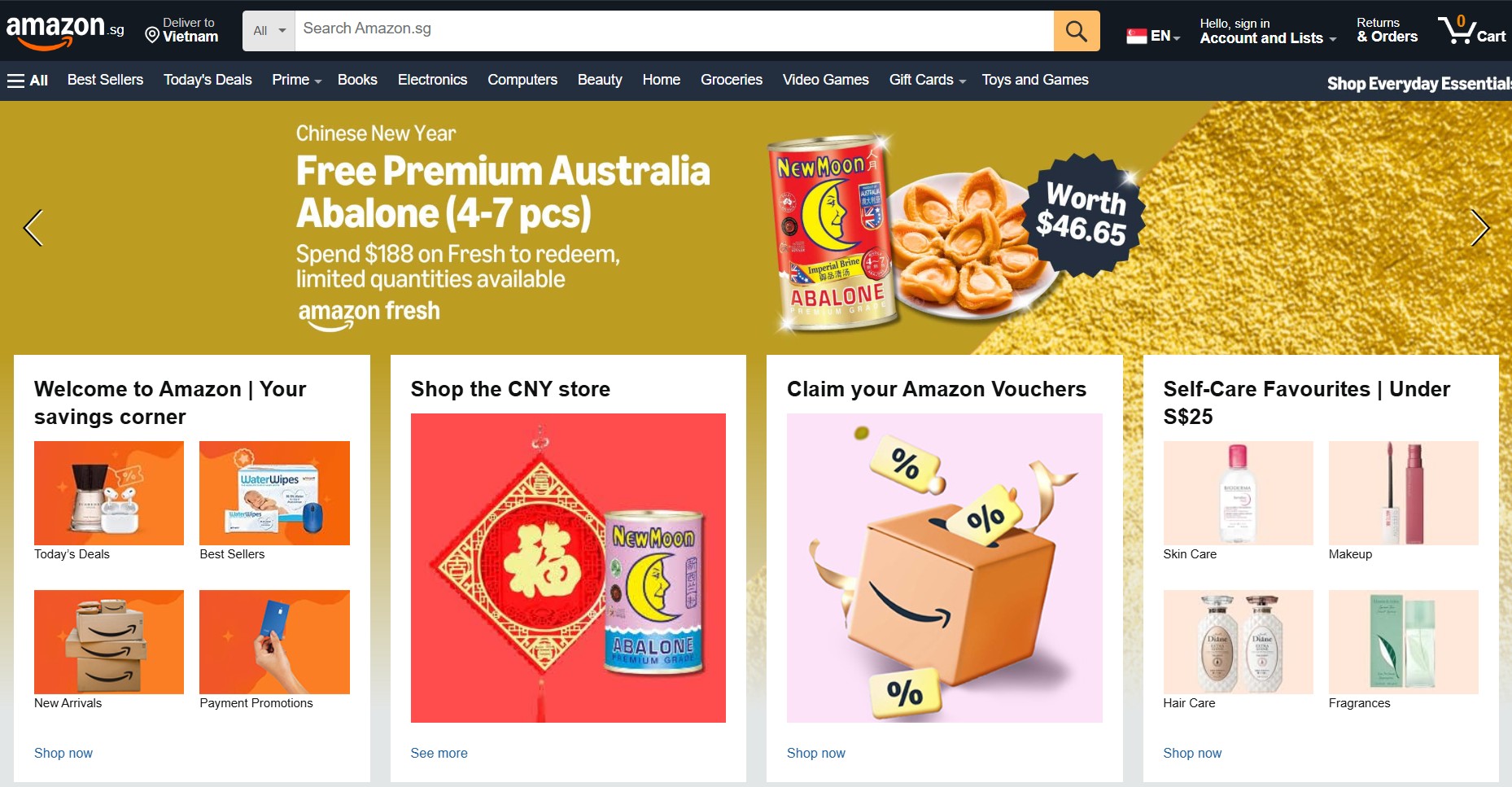
Amazon Singapore is the local marketplace of the global e-commerce giant, offering sellers access to a highly trusted shopping platform with strong logistics, fast delivery, and a premium customer experience. It is widely used by Singapore consumers for electronics, household items, books, beauty products, and international brands, making it one of the most credible ecommerce platforms in Singapore.
Who is Amazon Singapore best for?
Amazon Singapore is best for established brands, professional sellers, and businesses offering high-quality or branded products that benefit from strong customer trust and fast fulfillment.
Why sellers choose it:
- Strong buyer confidence and global brand reputation
- Access to Amazon’s fulfillment and delivery network
- High purchase intent from Singapore shoppers
- Opportunities for cross-border selling
Key features:
- Fulfillment by Amazon (FBA) for storage, packing, and delivery
- Amazon Ads for product visibility and traffic growth
- Secure payment processing and fraud protection
- Seller Central dashboard for inventory and performance tracking
- Prime-eligible fast shipping options
| Pros | Cons |
|---|---|
| High customer trust and strong conversion rates | Higher seller and fulfillment fees |
| Reliable fulfillment and fast delivery services | Strict seller performance requirements |
| Access to premium and high-intent shoppers | Intense competition in popular product categories |
| Scalable for local and cross-border sales | Limited branding and store customization options |
4. Carousell
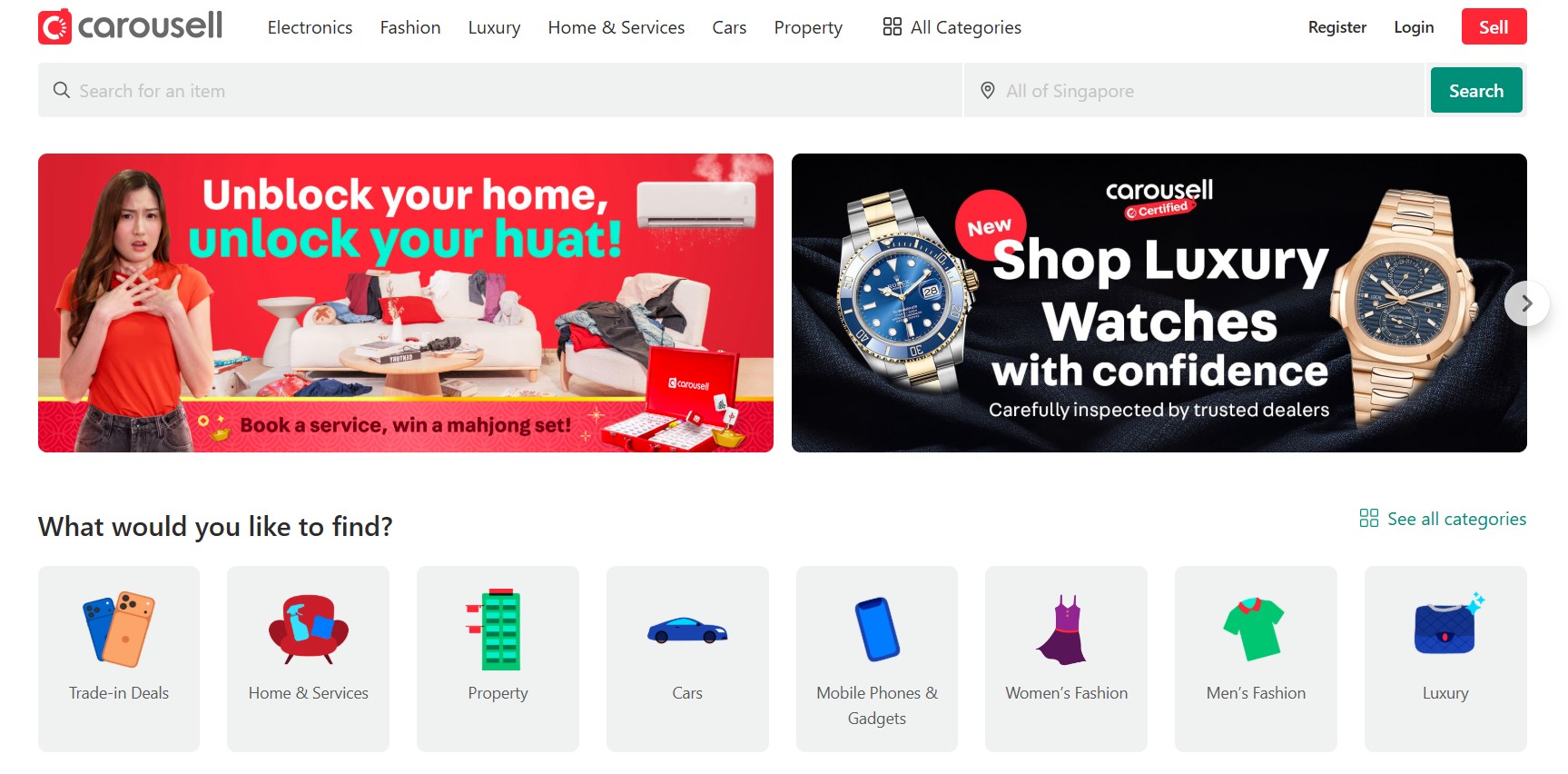
Carousell is a Singapore-born ecommerce marketplace that focuses on simple, community-driven buying and selling. It is especially popular for secondhand items, local deals, and fast peer-to-peer transactions, while also supporting new products from small businesses. Its mobile-first design makes it one of the most accessible ecommerce platforms in Singapore for casual sellers and micro-entrepreneurs.
Who is Carousell best for?
Carousell is best for individual sellers, small businesses, and local brands selling secondhand goods, handmade items, or budget-friendly products directly to Singapore buyers.
Why sellers choose it:
- Very low barrier to entry with fast product listing
- Strong local user base and community engagement
- Ideal for quick sales and local meetups or delivery
- Simple mobile-focused selling experience
Key features:
- In-app chat for direct buyer-seller communication
- Mobile-friendly listing and management tools
- Local delivery integrations and meetup options
- Seller profiles with ratings and reviews
- Boost and promotion features for higher visibility
| Pros | Cons |
|---|---|
| Low-cost or free selling for most users | Lower buyer trust compared to major marketplaces |
| Fast and easy product listing | Limited advanced ecommerce features |
| Strong local reach within Singapore | Not ideal for large-scale selling operations |
| Great for secondhand and niche products | Less suitable for premium branded goods |
5. Shopify
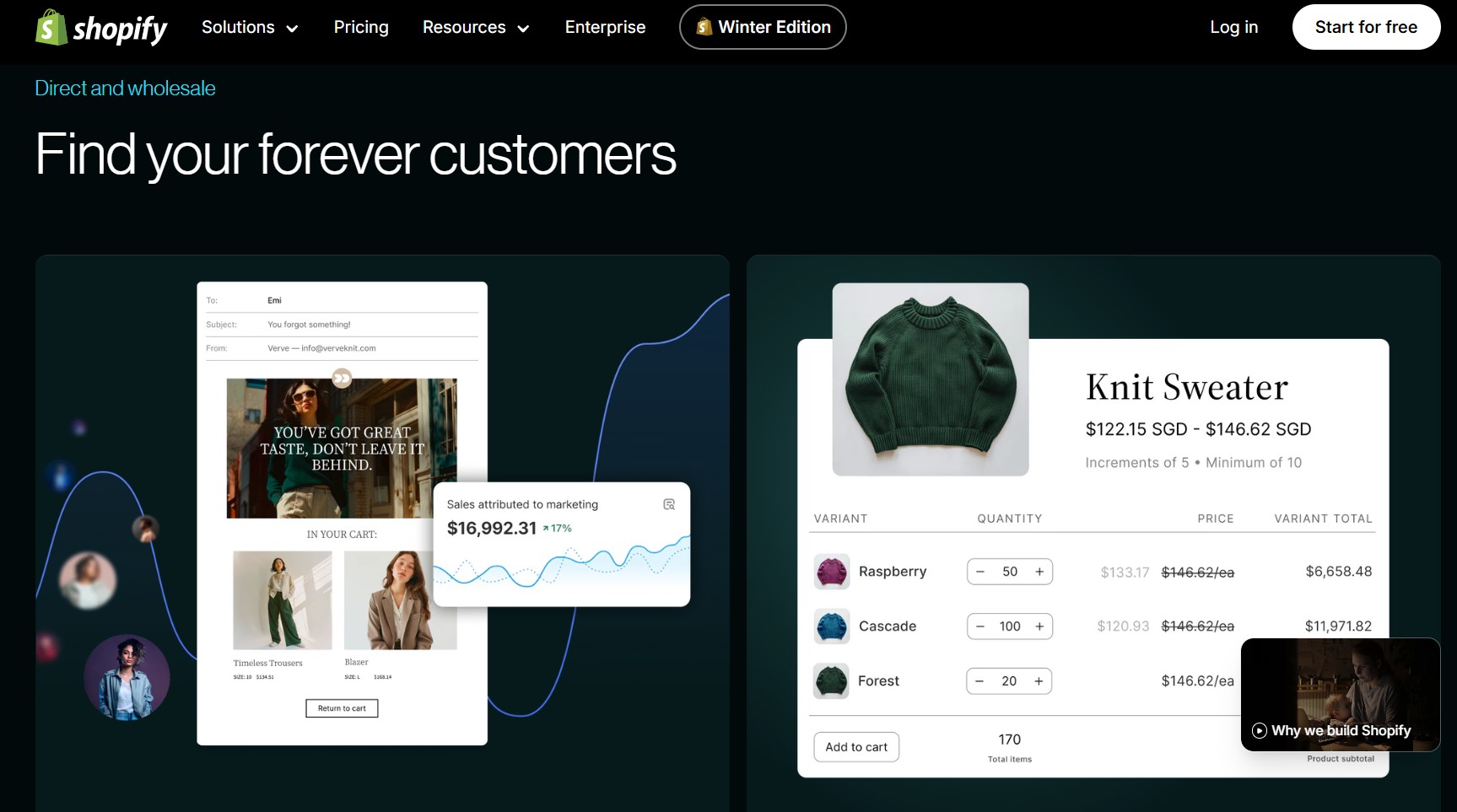
Shopify is a cloud-based ecommerce platform that allows businesses to build and operate fully branded online stores with complete control over design, customer experience, and data ownership. Rather than selling through third-party marketplaces, companies can launch a customized Singapore ecommerce website built for long-term growth. According to BuiltWith, more than 10,663 websites in Singapore were powered by Shopify as of January 2026, highlighting its strong adoption among startups and scaling brands.
Who is Shopify best for?
Shopify is best for beginners, startups, and growing businesses that want an easy-to-use platform to build a professional online store and scale both B2C and B2B sales.
Why sellers choose it;
- Simple drag-and-drop website builder with no technical setup required
- Fully hosted platform with secure hosting included
- Large app marketplace for marketing, logistics, and automation
- Supports both B2C and B2B ecommerce operations
- Strong ecosystem of Shopify Partners for design and development support
Key features:
- Customizable store templates and mobile-optimized design
- Built-in checkout with PayPal, Stripe, and local payment integrations
- Shopify Fulfillment Network for inventory and delivery management
- Dropshipping integrations with popular suppliers
- Social commerce selling on platforms like Instagram and Facebook
- Shopify POS system for online and in-store sales
- Extensive app store for marketing, shipping, and analytics
| Pros | Cons |
|---|---|
| Beginner-friendly with fast setup | Monthly subscription and app fees |
| Fully hosted with minimal technical maintenance | Transaction costs if not using Shopify Payments |
| Highly scalable with extensive integrations | Requires ongoing marketing to drive traffic |
| Supports omnichannel selling | Advanced customizations may need developer support |
Ready to launch your Singaporean ecommerce store with Shopify? We can help!
Launch Your Singapore Store with Shopify Experts!
6. WooCommerce
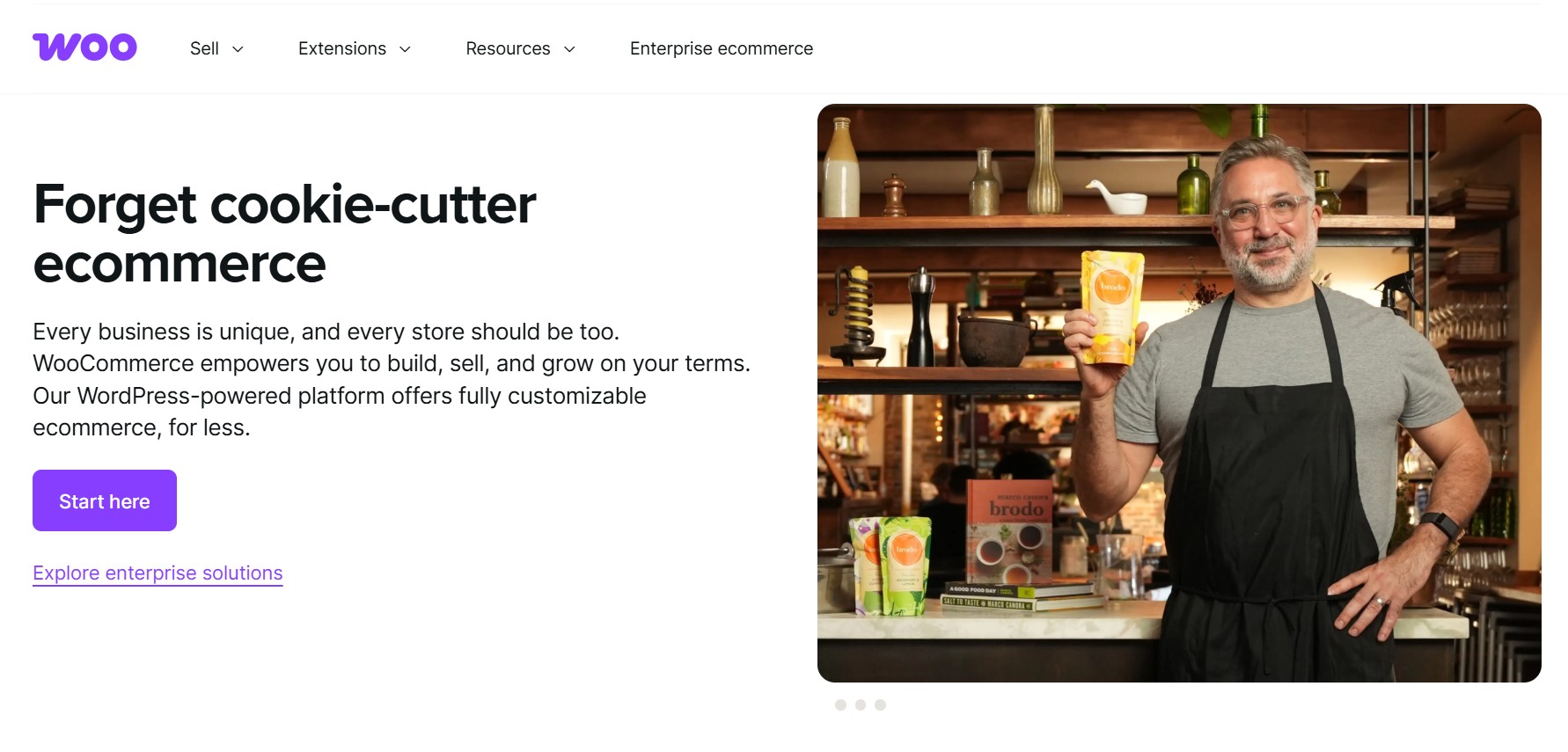
WooCommerce is a flexible, open-source ecommerce plugin built for WordPress, allowing businesses to turn their websites into fully functional online stores. Unlike hosted platforms, WooCommerce gives full control over site design, data, and customization, making it a popular choice among developers and growing brands across Singapore that want complete ownership of their ecommerce operations.
Who is WooCommerce best for?
WooCommerce is best for businesses that already use WordPress or want maximum control over their Singapore ecommerce website, including developers, content-driven brands, and companies with custom functionality needs.
Why sellers choose it
- Full ownership of website and customer data
- Highly customizable with thousands of themes and plugins
- Strong SEO capabilities through WordPress integration
- No mandatory monthly platform fees
- Suitable for both small stores and complex ecommerce setups
Key features
- Open-source ecommerce framework
- Integration with major payment gateways and local providers
- Customizable product types and checkout flows
- Inventory, order, and tax management tools
- Large plugin ecosystem for marketing, shipping, and automation
- Mobile-responsive store themes
| Pros | Cons |
|---|---|
| Full control over website design and functionality | Requires managing hosting and security |
| Strong SEO capabilities through WordPress | More technical setup for beginners |
| Cost-effective with no mandatory platform fees | Performance depends on hosting quality |
| Highly customizable with plugins and themes | Plugin and maintenance costs can add up |
7. Wix
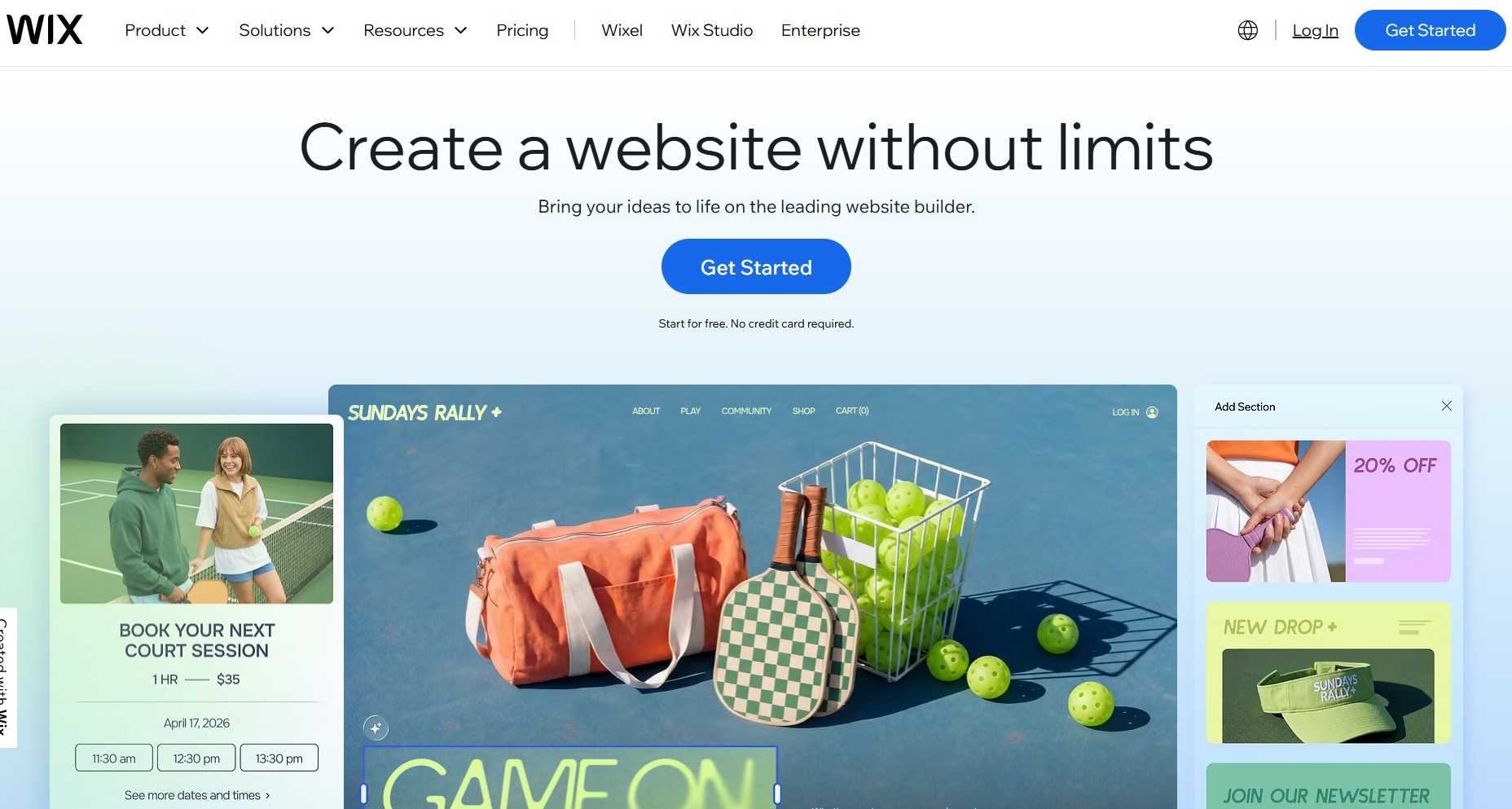
Wix is a beginner-friendly website builder with built-in ecommerce functionality that allows businesses to create visually appealing online stores without coding. It is popular among small businesses and solo entrepreneurs who want a fast, affordable way to launch a professional-looking ecommerce website in Singapore.
Who is Wix best for?
Wix is best for beginners, small businesses, and creatives who want an easy drag-and-drop platform to start selling online with minimal technical setup.
Why sellers choose it
- Simple website builder with ready-made templates
- Quick setup with hosting included
- Affordable pricing plans for small businesses
- Built-in tools for payments, marketing, and SEO
Key features
- Drag-and-drop website editor
- Secure checkout and payment integrations
- Mobile-optimized store templates
- Built-in marketing and email tools
- Product and inventory management
- App marketplace for extra functionality
| Pros | Cons |
|---|---|
| Very easy to use for beginners | Limited scalability for large stores |
| Attractive and customizable templates | Fewer advanced ecommerce features |
| All-in-one hosted platform with fast setup | Less flexibility than open-source solutions |
| Affordable pricing for small businesses | Performance may slow with heavy app usage |
8. BigCommerce
BigCommerce is a powerful hosted ecommerce builder in Singapore designed for fast-growing and enterprise-level online businesses. It offers advanced built-in features, strong performance, and high scalability without relying heavily on third-party apps. In Singapore, BigCommerce is commonly used by brands that expect high sales volume and need a robust ecommerce infrastructure.
Who is BigCommerce best for?
BigCommerce is best for medium to large businesses and high-growth brands that require advanced ecommerce capabilities, strong performance, and scalability.
Why sellers choose it
- Built-in enterprise-level ecommerce tools
- Strong performance and security as a hosted platform
- Excellent SEO and multi-channel selling features
- Lower reliance on paid apps compared to other platforms
Key features
- Advanced product and inventory management
- Built-in SEO optimization tools
- Multi-channel selling on marketplaces and social platforms
- Secure checkout and global payment integrations
- Mobile-optimized storefronts
- API support for custom development
| Pros | Cons |
|---|---|
| Highly scalable for fast-growing businesses | Higher pricing compared to basic platforms |
| Strong built-in ecommerce features | More complex setup for small businesses |
| Good SEO performance | Limited free theme options |
| Reliable hosted infrastructure and security | Learning curve for advanced tools |
9. Squarespace

Squarespace is a design-focused website builder with built-in ecommerce features, known for its clean layouts and visually polished templates. It is popular among creatives, lifestyle brands, and small businesses in Singapore that prioritize strong visual presentation alongside simple online selling tools.
Who is Squarespace best for?
Squarespace is best for creatives, entrepreneurs, and small brands that want a beautiful, professional-looking online store without technical complexity.
Why sellers choose it
- High-quality design templates optimized for branding
- Easy-to-use website builder with hosting included
- Built-in ecommerce and content tools
- Good for showcasing products and portfolios
Key features
- Drag-and-drop website editor
- Mobile-responsive design templates
- Secure checkout and payment integrations
- Inventory and order management
- Built-in blogging and SEO tools
- Marketing and email campaign features
| Pros | Cons |
|---|---|
| Beautiful, professional design templates | Limited advanced ecommerce features |
| Easy setup with hosting included | Less scalable for large online stores |
| Strong branding and content tools | Smaller app ecosystem |
| Beginner-friendly platform | Fewer customization options than open-source solutions |
10. Big Cartel

Big Cartel is a simple ecommerce platform designed primarily for artists, makers, and small independent brands. It focuses on lightweight online stores that are easy to set up and manage, making it a popular choice for creatives in Singapore who sell limited product lines, handmade items, or digital goods.
Who is Big Cartel best for?
Big Cartel is best for artists, creators, and small businesses that want a simple, low-cost way to sell a small number of products online.
Why sellers choose it
- Very easy store setup with minimal technical skills required
- Affordable plans, including a free option for small shops
- Clean and simple storefront design
- Ideal for limited product catalogs
Key features
- Basic online store builder with customizable themes
- Secure checkout and payment integrations
- Product and order management tools
- Mobile-friendly storefronts
- Simple analytics for tracking sales
| Pros | Cons |
|---|---|
| Very easy to set up and use | Limited advanced ecommerce features |
| Affordable plans including a free option | Not suitable for large product catalogs |
| Clean and simple storefront design | Fewer integrations and apps |
| Ideal for artists and small brands | Limited customization compared to bigger platforms |
What Are The Best E-commerce Platforms For Startups And Small Businesses?
You need to consider multiple factors, such as technical expertise, desired features, and budget, to choose the best ecommerce platform in Singapore for startups and small businesses. Here are the top choices:
Shopify: For Ease Of Use
Shopify is among the largest ecommerce platforms in Singapore due to its ease of use. This platform offers a comprehensive solution with built-in features, an intuitive interface, and responsive customer support.
WooCommerce: For Cost-Effectiveness And Customization
WooCommerce is a cost-effective and highly customizable option that integrates seamlessly with WordPress. The open-source nature allows for extensive customization, making it one of the ecommerce platforms for small businesses.
Wix E-commerce: For User-Friendly Website Builder
The user-friendly drag-and-drop website builder of Wix stands out to those who want to create a visually stunning online store without any coding knowledge. You can easily find a plan based on its tiered pricing structure to fit your budget.
Ecwid: For Simplicity
Ecwid is a lightweight solution that integrates well with existing websites. If you intend to add ecommerce capabilities to your site, feel free to experiment with this straightforward platform.
Square Online: For Integration
Square Online is the best choice for businesses with Square POS as it provides excellent integration between online and offline sales. You can use it to unify inventory and customer management.
How to Choose the Best e-commerce Platform in Singapore
Choosing the right platform for an e commerce business in Singapore impacts everything from how easily customers can buy to how smoothly the business can scale across the region. The ideal solution should support local payment preferences, efficient operations, and future expansion into Southeast Asian and international markets.
1. Understand Your Customers and Sales Model
Start by defining who you are selling to and how your business generates revenue. Some ecommerce platforms in Singapore are built for fast consumer sales through marketplaces, while others are better suited for branded stores, subscriptions, or B2B transactions.
If your goal is quick visibility and high traffic, marketplaces can deliver immediate reach. If you are focused on building long-term customer relationships and brand loyalty, a dedicated online store platform offers greater control.
Matching the platform to your target audience and sales approach helps improve conversion rates and operational efficiency from the start.
2. Consider Your Budget and Ongoing Costs
When choosing an e-commerce platform, it’s important to look beyond the initial setup price and understand the full cost of running your online store. This includes monthly subscriptions, transaction fees, marketing tools, payment processing charges, and fulfillment services.
Some platforms offer low entry costs but require add-ons as your business grows, while others bundle most features into higher plans. For businesses building a Singapore ecommerce website, selecting a solution with transparent pricing and scalable costs helps avoid unexpected expenses as sales volume increases.
3. Balance Ease of Use with Future Growth
Many businesses prefer platforms that are quick to set up and easy to manage, especially when launching their first online store. User-friendly tools can help you start selling faster without technical complexity.
However, as an ecommerce website Singapore businesses rely on begins to grow, you may need advanced features such as automation, custom integrations, and expanded product management. Choosing a platform that is simple today but scalable for tomorrow helps prevent costly migrations later and supports long-term expansion.
4. Check Regional and Cross-Border Capabilities
Singapore is a major e-commerce hub for Southeast Asia, and many businesses aim to sell beyond the local market. When choosing a platform, look for features that support cross-border operations such as multi-currency pricing, international shipping options, and regional tax handling.
5. Review Local Payment and Delivery Options
Choose a platform that supports popular Singapore payment methods and integrates smoothly with local courier and fulfillment services. Reliable checkout options and efficient delivery directly improve customer experience, conversion rates, and long-term customer trust.
6. Look at Marketing and SEO Tools
Choose a platform that helps bring visitors to your store and turn them into customers. Built-in SEO tools, promotions, email marketing, and simple analytics make it easier to grow traffic and sales. Good marketing features save time and support steady business growth in a competitive market for e commerce in Singapore.
7. Prioritize Security and Compliance
Security is essential for building trust with online shoppers in Singapore. Choose a platform that offers secure payment processing, data encryption, and fraud protection to keep customer information safe.
It is also important that the platform follows local data protection standards, such as Singapore’s PDPA requirements. A secure and compliant system protects your business from legal risks while giving customers confidence to shop with you.
Key Benefits of Choosing the Right E-commerce Platform for Singaporean Businesses
The platform you choose does more than host your online store. It directly affects how customers shop, how smoothly your business operates, and how easily you can scale e commerce in Singapore’s competitive digital market. Here are three major benefits of using the right e-commerce platform.
Better Customer Experience and Higher Sales
A well-built platform makes shopping fast, simple, and mobile-friendly. Features such as smooth checkout, quick page loading, easy product search, and secure payments reduce friction for customers. When shoppers can browse and buy without issues, conversion rates increase and repeat purchases become more likely.
More Efficient Daily Operations
The right platform brings product management, orders, payments, shipping, and customer communication into one system. This reduces manual work and lowers the risk of errors. Automation tools can update inventory, send order notifications, and track deliveries, allowing businesses to focus more on marketing and growth instead of admin tasks.
Easier Growth and Smarter Business Decisions
Strong ecommerce solutions in Singapore are built to handle higher traffic, more products, and new sales channels as your business expands. Many also provide built-in reports and analytics to track performance. With clear data on sales, customer behavior, and marketing results, businesses can make better decisions and scale more confidently across Singapore and the region.
Build a High-Performing eCommerce Website for Your Business in Singapore
Choosing the right platform is only part of creating a successful online store. The design, performance, and technical structure of your e-commerce website directly affect user experience, search visibility, and conversion rates in Singapore’s competitive digital market.
A well-built ecommerce website improves mobile usability, page speed, checkout flow, and integration with payment gateways and logistics partners — helping businesses turn traffic into real sales.
At TechTIQ Solutions, we work with companies across Singapore to plan, design, and develop scalable ecommerce websites that are built for growth, not just launch. For businesses looking for a complete ecommerce software, our e-commerce website development services support everything from platform selection to custom development and performance optimization. Our approach focuses on building ecommerce experiences that are fast, user-friendly, and ready to scale as your business expands.
FAQs
What is the most popular eCommerce platform in Singapore?
Shopee is the most popular e-commerce platform in Singapore. It leads with around 8-13 million monthly visits as of late 2025, far ahead of Lazada and others, thanks to its mobile-first approach and massive local traffic.
Can I create an eCommerce website in Singapore for free?
No, you cannot create a fully functional e-commerce website for free long-term, but free tiers exist with limitations. Platforms like Shopee or Lazada let you list products at no upfront cost (just commissions on sales), while WooCommerce is free software but requires paid hosting.
Which ecommerce platform Singapore is most profitable?
There’s no single “most profitable” e-commerce platform in Singapore, as it depends on your business model, niche, and scale. However, owned platforms like Shopify often yield higher net margins (20-40%) for established sellers due to no marketplace commissions, while Shopee excels for quick volume sales.
What are the leading ecommerce websites in Southeast Asia?
Shopee and Lazada lead as the top e-commerce websites across Southeast Asia. Shopee dominates with over 550 million monthly visits, operating in key markets like Indonesia, Vietnam, Thailand, the Philippines, Malaysia, and Singapore.
What are the key differences between hosted and self-hosted e-commerce platforms?
Hosted e-commerce platforms, like Shopify or BigCommerce, provide a fully managed service where the provider handles hosting, security updates, and maintenance on their servers. This makes setup quick and hassle-free, ideal for beginners, but it comes with recurring monthly fees and potential transaction charges, plus limits on deep customization.
Self-hosted platforms, such as WooCommerce on WordPress or Magento, give you complete control by running on your own server or hosting provider. You handle all maintenance, security, and scaling yourself, which cuts long-term costs and allows unlimited customization, but requires technical skills or hiring developers.
The main trade-offs are ease versus flexibility: hosted suits small Singapore sellers wanting speed without tech headaches, while self-hosted fits those needing bespoke features or high traffic control.
What are headless ecommerce platforms?
A headless ecommerce platform refers to an architecture where the front and backend of an ecommerce system are decoupled so they can operate independently. In this approach, you can use any framework or technology to build the frontend while the backend serves functionality and data through APIs.
Many businesses apply this concept to ecommerce because it’s flexible. You can choose the best technologies and frameworks for your frontend development without worrying about the backend. Moreover, a decoupled ecommerce platform allows for a high level of customization. There is no limit to the templates and themes, helping companies that need to deliver personalized shopping experiences.
Scalability is another advantage of headless ecommerce platforms. They can handle large volumes of transactions efficiently as your business grows and traffic increases. Headless ecommerce platforms also provide seamless integration with various third-party services and apps. The use of APIs ensures you can use the best tools to enhance your ecommerce operations.
What categories perform best on Shopee versus Lazada?
Shopee drives high volume in trendy apparel, affordable beauty (e.g., K-beauty), small gadgets, and lifestyle items, fueled by impulse buys, flash sales, and its younger audience. These categories benefit from Shopee’s gamification and promotions, yielding quick sales for small Singapore sellers.
Lazada dominates higher-value electronics (smartphones, laptops), home appliances, furniture, and baby products, attracting professionals who prioritize authenticity and quality. Its logistics edge suits bulkier items with reliable delivery.


Related articles
How to Build an Ecommerce Website from Scratch?
 Bruce Pham
  26 Dec 2024
Ecommerce Trends in Singapore: What You Need to Know for 2026
26 Dec 2024 
Ecommerce Website Design: Examples and Tips for Singapore Businesses
26 Dec 2024 


